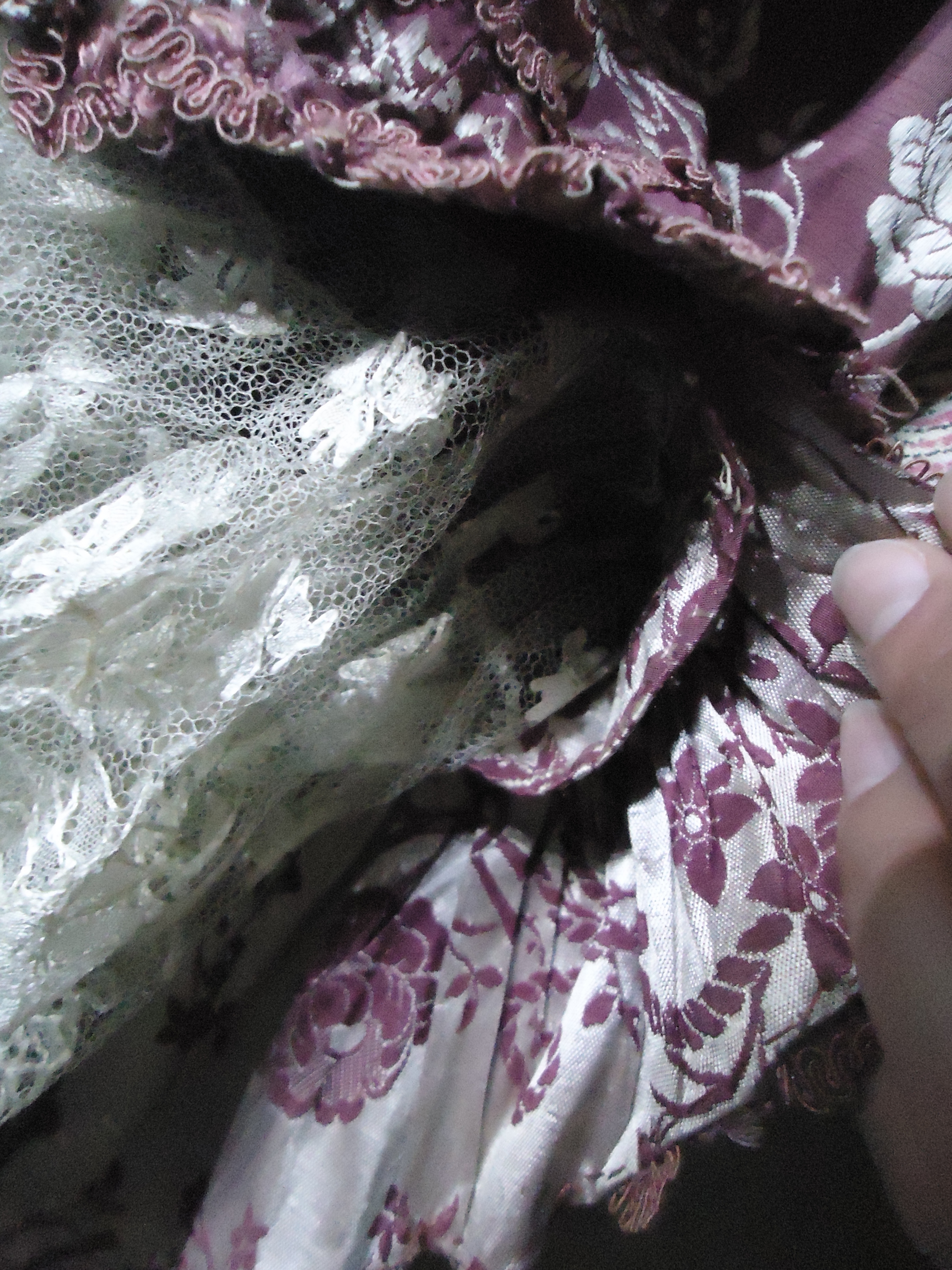
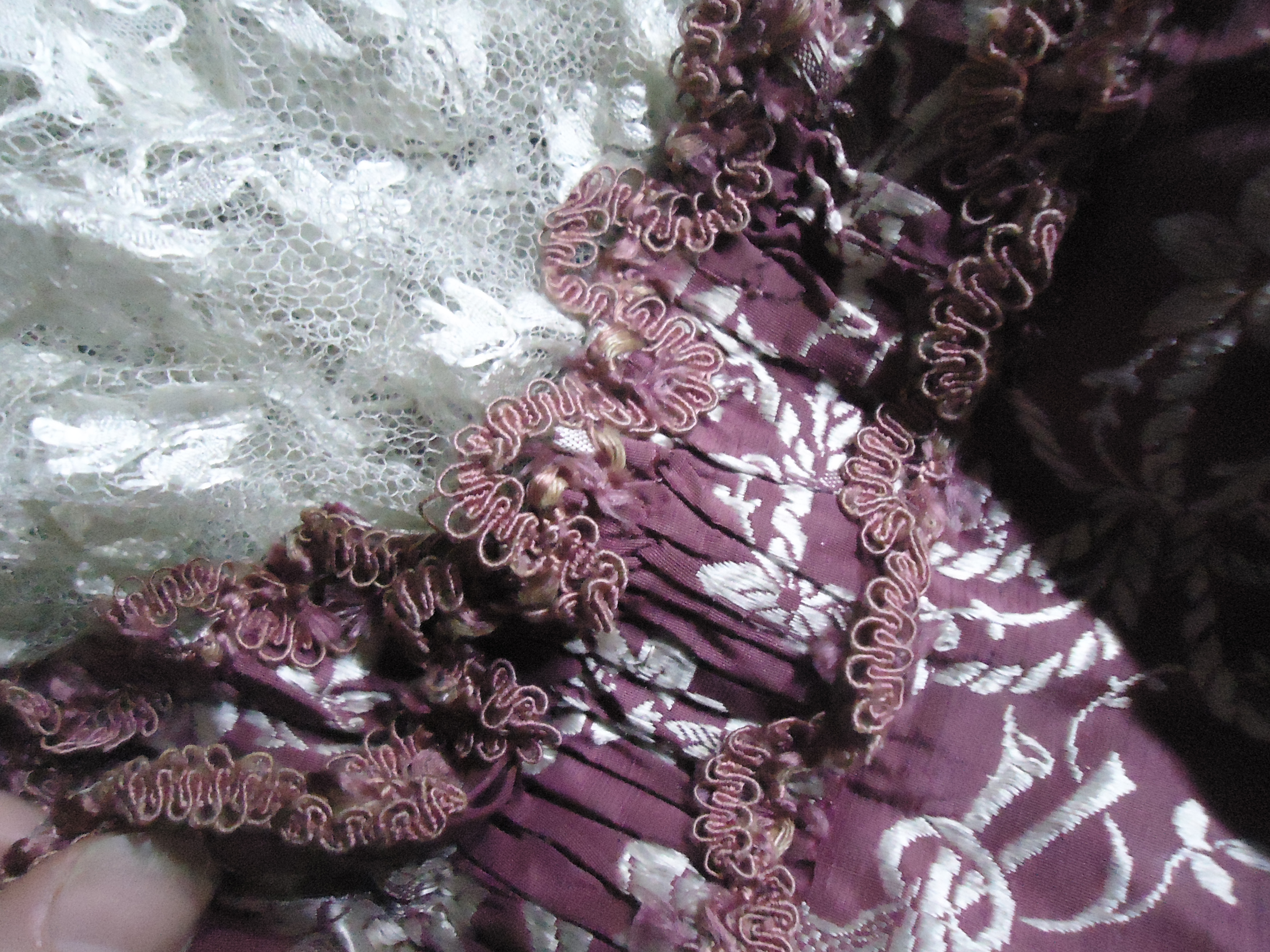
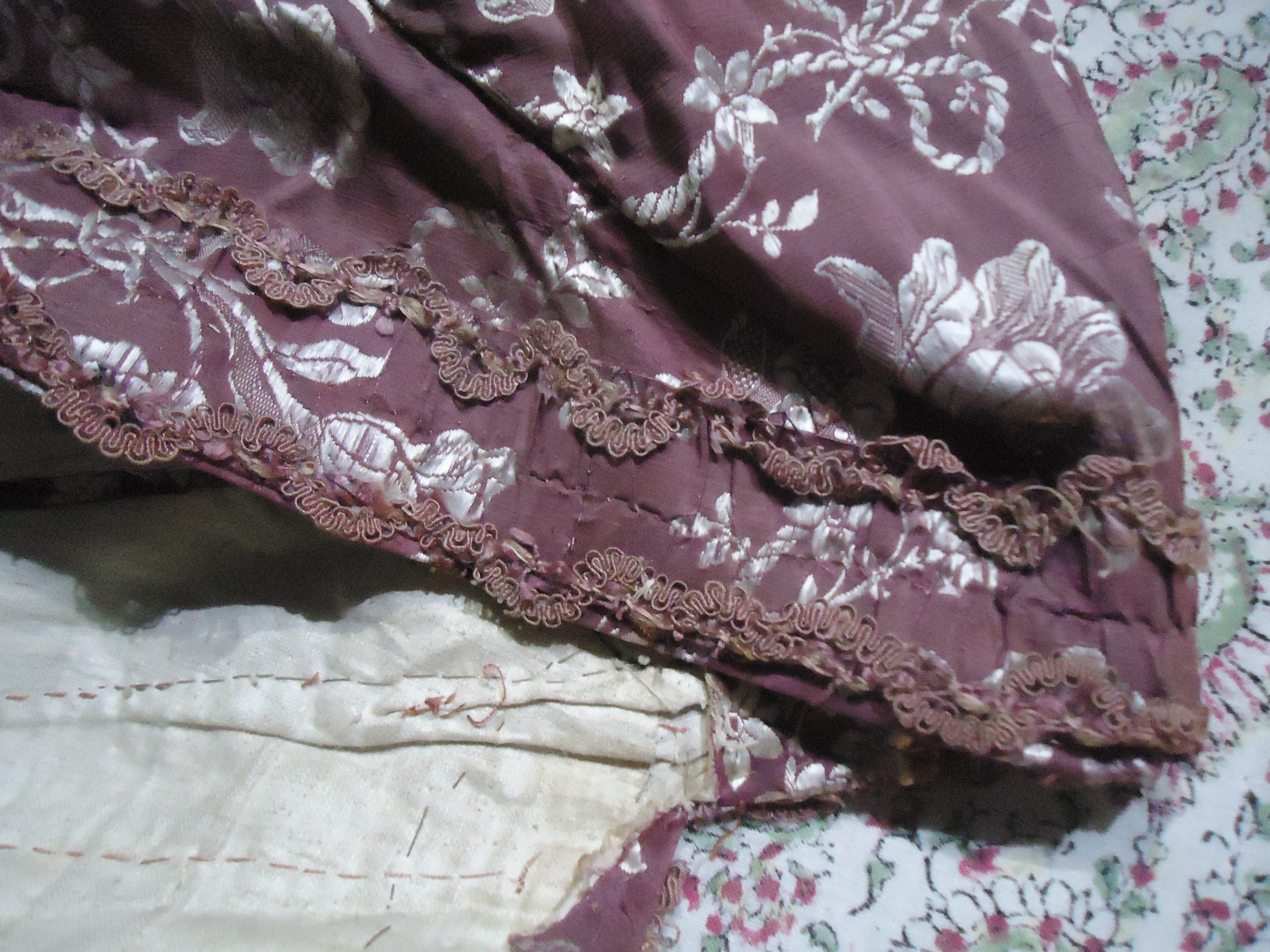
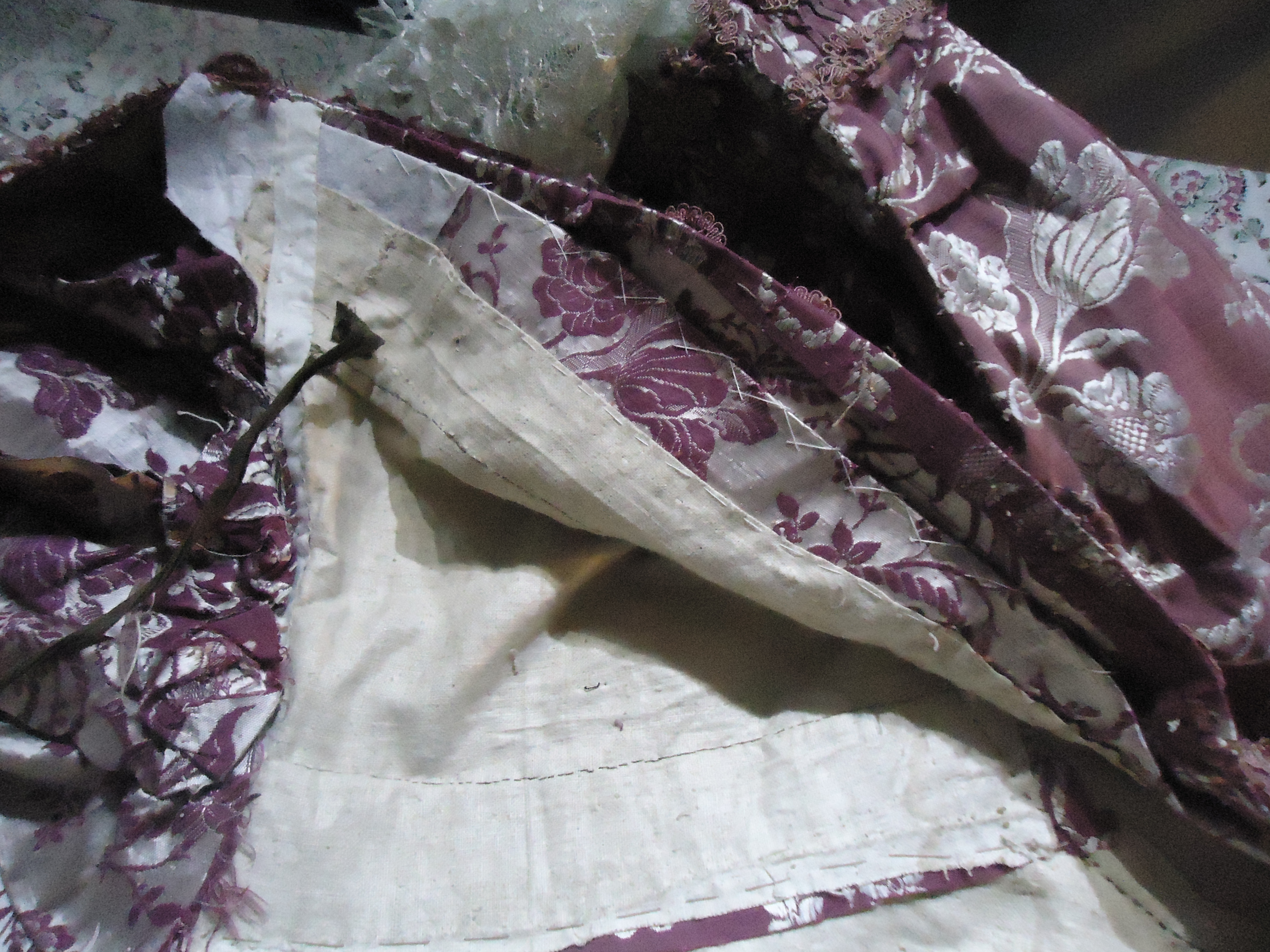
Thursday, 22 January 2015

The Beautiful Mrs Graham by Maxtone Graham

The Beautiful Mrs Graham:

The Cathcart Circle
By Maxtone Graham
The Beautiful Mrs Graham - Maxtone Graham - 1927
Front cover

Mrs Cathcart Graham - Gainsborough - 1777 - HandBound
Gainsborough's portrait of Mrs Graham - 1777
This book is awesome! Truly. We read it in the hope of gleaning any information and comments about clothing but the ladies of the Cathcart Circle don't seem to be too obsessed with what dresses they wore. It was, however, an absolute goldmine in socially historical facts.
It is, essentially, a collection of family letters dating from the mid 18th century and with the author filling in the general background as the years progress. The letters come thick and fast and are just such an amazing read when you consider that most of them were simply written between 3 sisters.  As a reader it would've been nice to know where the author gets the background information from - whether there was a diary also found with the letters or a family accounts  but apart from that the letters pretty much lie in consecutive order and follow the story of 9 siblings.
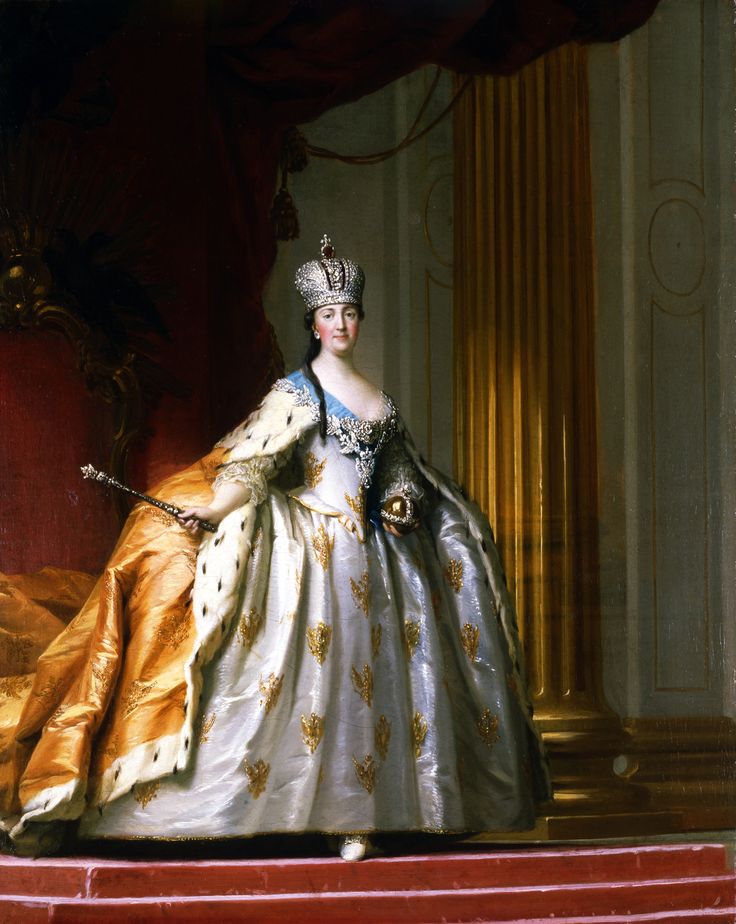
Catherine II- by Erichsen - 1778-79 -HandBound
Catherine The Great - Vigilius Erichsen - 1778-79
It starts off with Lady Cathcart, the mother or these 9 and her ambassador-of-a-husband Lord Cathcart, during their time in Russia - which is awesome enough. Seeing a glimpse of Catherine the Great and her court is fascinating. The first scanned-in page here describes a social function that they were invited to, fairly early on in their appointment to Russia. It's incredible. Firstly, they're having a meal where the food arrives through the table, and what's more; they start having fun with it and asking for ridiculous things. Please read this glimpse of a real event in 1768 as it's kind of unbelievable.
Some of the main names in Catherine the Greats reign are mentioned on these pages and although every thing reads lovely and splendid there is an undercurrent hint of what was going on in Catherine's court. The author mentions that letters were possibly checked and that there was a great sense of spying in Catherine the Greats court that made being honest in letters less likely. We know none of this through the actual letters.
It also has a couple of letters that Lady Cathcart wrote to her daughters when she suspected she was dying. The author also includes in this section a letter that the 9th Lord Cathcart wrote to all Lady Cathcarts friends after her death and it starts with a quote from another letter she wrote. We are so tempted to steal this quote, it's as if it is from the very pages of Shakespeare and is pure beauty. She must've been quite a lady and quite a believer.
"Foolish Eyes! must you be swimming in tears because of those Things? Is not the Day of our Death as natural as that of our Birth?...I mix these very few tears with yours, dear kind fellow creatures; we shall meet again; I trust in happiness through the merits of a crucifed Saviour. Weep not long, but ever remember me with the Balm of Friendship."
These words take on specialness when your remember that this was a lady writing to her friends in real life and not a stage production.
Cathcart Circle - HandBound Research
Page 10 - A Meal with Catherine the Great in Russia - 1768.

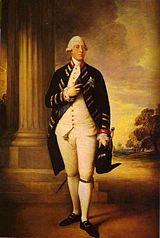
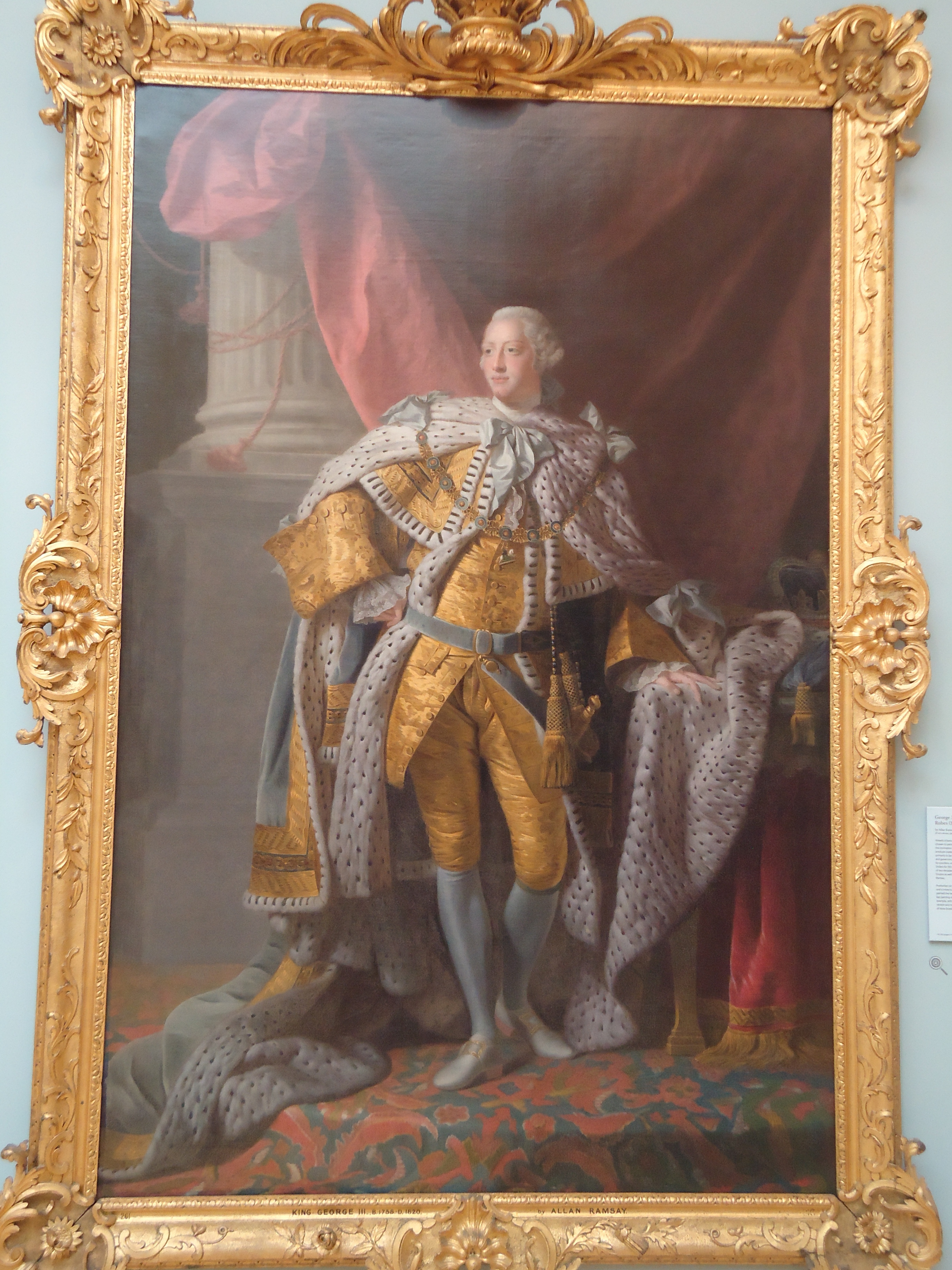
Gainsborough - 1781- George III - HandBound
George III - Gainsborough - 1781
The 9 siblings of Lord and Lady Cathcart are:
- Jane born 20th may 1754. Married 4th Duke of Atholl. Died 1790. Had 5 sons and 4 daughters.
- William, born 17th Sept 1755. 10th Lord and 1st earl Cathcart. Married Elizabeth Elliot. Died 16th Jun 1843. Had 6 sons and 4 daughters.
- Mary (our 'Beautiful Mrs Graham') Born 1st March 1757. Married Thomas Graham. Died 26th June 1792. Had no children.
- Louisa, born 1st July 1758. Married 7th Lord Stormont in 1776 and then Hon. Robert Greville in 1797. Died 1843. had 4 sons and 1 duaghter with Lord Stormont and 1 son and 2 daughters with Hom. Greville.
- Charles Allan, born 28th Dec 1759. Unmarried and died at sea 10th June 1788.
- John, born 23rd April 1761. Died at 10 months.
- Archibald Hamilton, bonr 25th July 1764. Married Frances Hanrietta. Died 1841. Had 1 son and 7 daughters.
- A son still born - 7th June 1768.
- Catherine Charlotte, 8th July 1770. Died Unmarried 20th Oct 1794.

The lives of these siblings cover glimpses into the English Court of George III, his wife and his illness. It includes the British politicians and some of the court life surrounding these notable figures. When the 3rd sister goes to France we see a window into the court of Marie Antionette and King Louis XVI. It has two brothers serve in the American Independant War, experience India, give accounts of  being at sea and talk of the French Revolution. It contains letters from the Duchess of Devonshire, snippets from Robert Burns and other notable people. Each page kept me totally entranced.

It also stamped all over some of our ideas that we had built up from reading other books. Lisa Picard in her fabulous books - particularly Dr Johnson's London, suggests that' Supper' isn't a thing that happened in the 18th century. The main and only meal being 'Nooning' or 'lunch'. We've also researched this in other areas and the general idea is that this main midday feast began to become more fashionable at say 2:oo, then 5:00 and then 8:00 with the Victorians, which then opened up space for lunch to happen again. What's mentioned in these letters here doesn't always correlate with this idea. Can we just say; that we're not disagreeing with Lisa Picard, who we think is wonderful and who obviously came across this idea of nooning in contemporary historical documents. It's simply that it's not what we read in these pages. Firstly the word 'Supper' is used and secondly it is used in connection with an evening meal. Also, the balls had 'Suppers' included in them. This book also tramped all over our idea (again mostly from probably mis-understanding Lisa Picard)  that Christmas wasn't an idea that was celebrated back in the 18th century; that it was Michaelmas that they celebrated and that it was a root of our version of Christmas. Again; this doesn't seem to tie in with these letters. Christmas is mentioned several times and one particular letter by Jane Cathcart (known only ever as the Duchess in these letters once she was married) describes guests having problems travelling to them through the snow. She also mentions some of the decorations. It also has bits that surprised me: they are willing to talk about cheapness - p.176-177, a wonderful moment where they get stopped in their coach by 'footpads', Lady Louisa Stormonts arranged marriage and her letters from the time - Talk about humilty! It's quite something to read someone going through the process of an arranaged marriage and see what she writes to her very close sisters - it's not at all what you'd think.

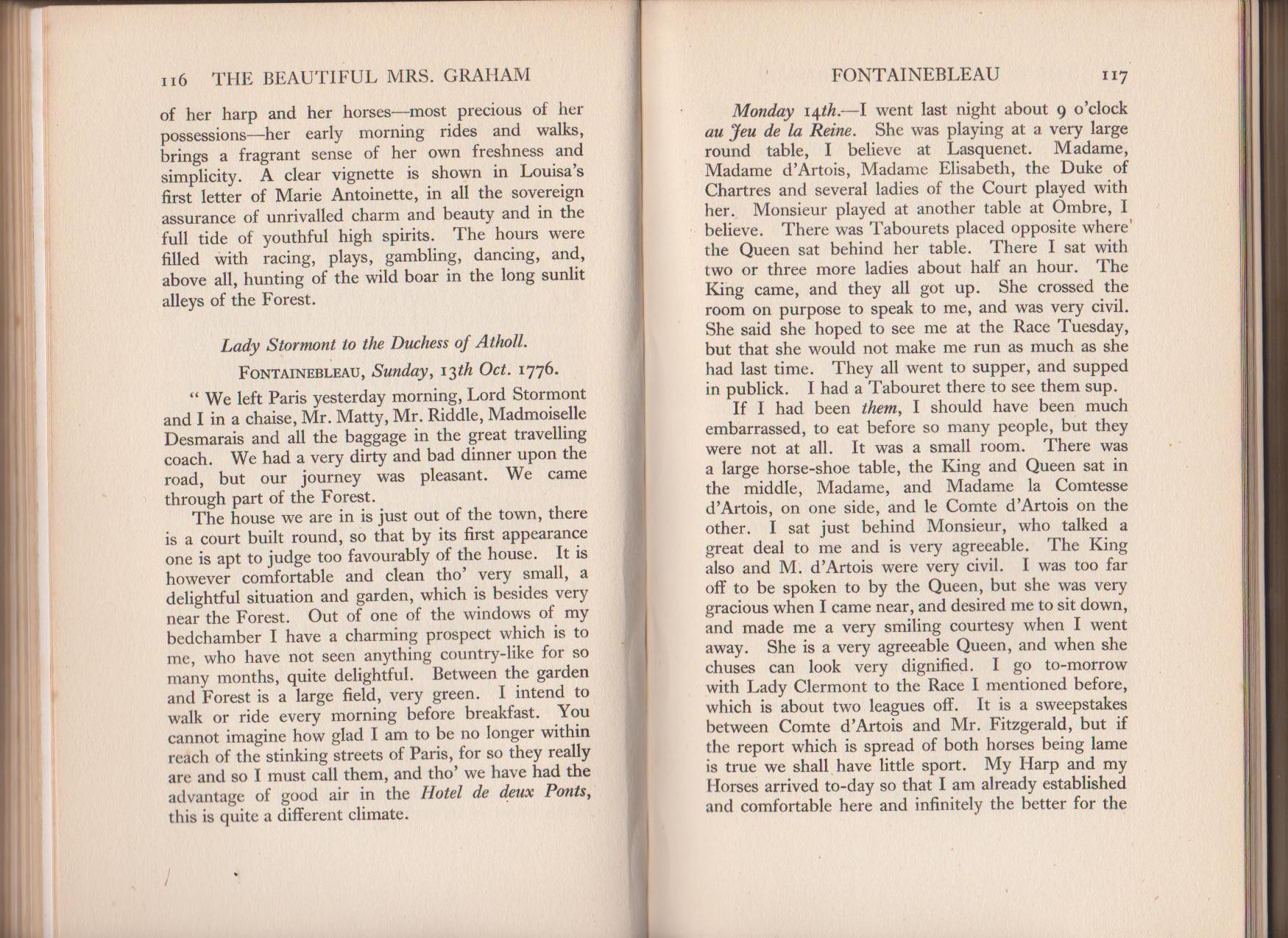
In the pages below is Lady Stormant's letter to her sister, the Duchess of Atholl, describing her first experiences of the French Court at Fontainebleau and the countryside retreat there.
Ann Buck in her book 'Dress in Eighteenth Century England' used quotes from various letters to show the difference between the English and French cultures and how the English Court's tradition of moving out of London and to the country was a horror to the French ladies. 'A French Lady told me she thought the English women not so happy as the French...' Mrs Montagu writes in 1776,  'I smiled and said I was not sure of that. She gave it as one reason that they were obliged to spend part of the year in the country. I combated her opinion, but found it impossible to make her comprehend the pleasure of a morning or evening walk...' (A.Buck, page 50). Therefore, I was quite surprised to read how the french court took leave of Versailles to go to a place in the country, hunt, race and take picnics. In the clip below you do not have all the letters that appertain to this Countryside retreat but you have Lady Stormont's first encounter of this place.
Cathcart Circle - HandBound Bibliography
Interesting Glimpse into the French court of Louis 16th and Marie Antoinette.
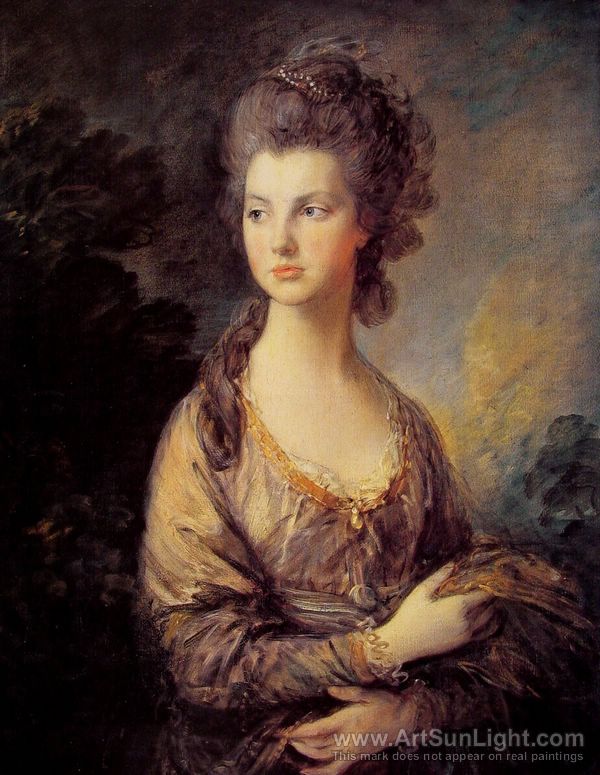
Mrs Graham - Gainsborough - 1775 - HandBound
The Beautiful Mrs Graham - Gainsborough - 1775
Lady Stormant, the 3rd youngest sister and who spent a lot of time in Paris as an Ambassador's wife, writes often about French fashions and what her sisters should wear if they came over. She writes in one letter in the prospect of Mary Graham (a.k.a The Beautiful Mrs Graham) visiting 'If you have a new black (they were in mourning at the time) silk sacque, very handsome, bring it, if not don't for hoops and everything are different here from what we wear...I am trying to recollect your gowns. I think you have a pretty spring silk which was in a court dress and a trimming, which would make a very handsome sacque."  I've highlighted this quote as it creates an interesting idea that though Lords and Ladies, their dresses weren't necessarily worn and discarded in the same manner as we picture and in the same manner as we do today.  Perhaps it's easy to assume a snobbery in dress about re-wearing items or always having to have dresses new for all of the Nobility and the fashionable but this quote, atleast hints to that not necessarily being the case.
Gainsborough - 1781- Queen Charlotte - HandBound
Queen Charlotte - Gainsborough - 1781
The Duchess of Atholl ( Mrs Graham's older sister) was  a high figure in society. William the older brother, married an American lady, Elizabeth Elliot, known as Lady Cathcart in the letters. Lady Cathcart became very closed to the queen and when Small Pox broke out near where they lived, Queen Charlotte took her aside at Court and virtually demanded that they took possesion of Frogmore House to escape the illness. Her roles in court were Governess and Lady of the Bedchamber in 1795 to the Queen and Lady-in-Waiting in 1801 and 'finally Mistress of the Robes'.
Catherine Cathcart, a younger sister of Mary, Louisa and Jane, also became 'Maid of Honour' to Queen Charlotte who was her Godmother.
Quotes from the Letters about Fashion:
- p.53: "We dined today at Coventry, where we bought ribbons, some of which I send you; I don't know whether you will think them very pretty, but it was the manufacture of the place and the newest they had. You will want variety at the Races and they may happen to suit some of your gowns. "
- P.54: "I will also endeavour to send you a pair of Riding Gloves, which are made of fawn skin; we got them at Woodstock, where they are famous for making them." ( These two quotes are especially interesting to us after reading Dress in 18th Century England by A.Buck as she mentions quite deeply the various places of trade in the U.K)
- P.69: "My Habit is pretty, something like yours in colour with little buttons like those on Graham's green riding-dress, in the last fashion."
- P.69: " Mr Greville has given me abundance of charming and very long feathers from Paris, but I hvae not yet that the courage to wear the longest of them, for Papa is generally in the carriage and I cannot sit down without removing the cushion, which would not please him."
- "Lady B. has given me a dress for my birthday of blue satin which must be trimmed. Mixed colours are all the fashion. Puce and couleur des cheveaux de la Reine are the most fashionable."
- P.74-75: "Everybody was in mourning and a great many in white polonaises. Miss D. Wrottesley I suppose not being provided with one, thought black would do as well. It was one of those that are loose behind (we are intrigued by what this means!) and was tied up with two little knots of white ribbon, which had a very singular effect; it was laced with narrow white ribbon which with her dancing amde her a most visible figure."
- P.82: QUOTE OF THE MONTH! "He told me I should never appear at Paris without rouge."
There were many more quotes and wonderful information within this book but we shall leave that pleasure to you, to be able to dig inside this book and find each page a total surprise as we did!
A List of Portraits that we could find of some of the People mentioned in this book!
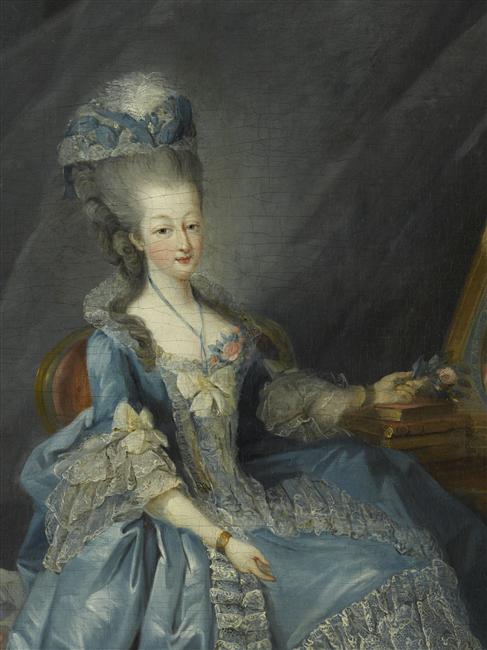
Comtess d'Artois - Gautier d'agoty-1775-HandBound custom made period costumes, HandBound Historical Costumes, Made to measure Historical Garments, 18th century Clothing, Replica costumes adn Reproductions from Museums and Paintings, Re-enactment clothing, Georgian Costume, 18th century Costume Research, Bespoke Replica costumes, Royalty in the 18thc, Key figures in 18th century European Nobility,
Comtess d'Artoise - 1775 - d'Agoty
- Comtesse D'Artios. She is mentioned fairly frequently in Lady Stormont's letters as a close friend to Antionette. There is only one bit where Louisa comments on her character and it's when she first meets her and says: "I went to Madame with the same ceremonies, Monsieur also coming in, they are both very agreeable, then I went to Madame d'Artois, who is not so much so. Mons. d'Artois was a little embarrassed, and she not a little." Whenever Lady Stormont mentions her again it is literally to say she was there and what she was doing, there appears to be no other description of her character.
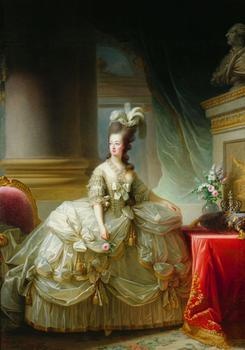
Marie Antionette - Vigee le Brun - 1778 - HandBound, HandBound Historical Costumes, Made to measure Historical Garments, 18th century Clothing, Replica costumes adn Reproductions from Museums and Paintings, Re-enactment clothing, Georgian Costume, 18th century Costume Research, Bespoke Replica costumes, Royalty in the 18thc, Key figures in 18th century European Nobility
M.Antionette - Le Brun - 1778

- Obviously Marie Antionette is mentioned very often and Lady Stormont says some very nice things about her. "The Queen was very talkative and agreeable though she was frightened too. She is a most agreeable figure, I think something like Lady Granby, and is vastly pleasing. The king came in, as soon as they had been to tell him. We all got up and he talked to me a little while and then went away. We sat down as before for a moment, then the Queen got up and we made our exit with three curtesies backwards, kicking away the bas de robes with one foot, as the Actresses do, which is absolutely necessary so as not to fall."
HandBound Historical Costumes, Made to measure Historical Garments, 18th century Clothing, Replica costumes adn Reproductions from Museums and Paintings, Re-enactment clothing, Georgian Costume, 18th century Costume Research, Bespoke Replica costumes, Royalty in the 18thc, Key figures in 18th century European Nobility
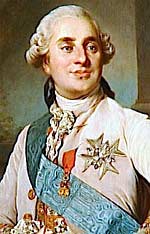
Louis XVI - Duplessis - no date

- The King doesn't get many mentions, its all pretty much the same as the above text. Here's another account of her experience at court where, again Lady Stormont gets to sit on a Tabouret which apparantly was a great honour and they watched the King and Queen and the Comte and Comtesse d'Artios eat. It is also another example of supper in the evening, being after 9 at night. "They all went to supper, and supped in publick. I had a Tabouret there to see them sup. If I had been them, I should have been embarassed to eat before so many people, but they were not at all. It was a small room. there was a large horse-shoe table, the King and Queen sat in the middle, Madame, and Madame la Comtesse d'Artois on one side and le Comte d'Artois on the other. I sat just behind Monsieur, who talked a great deal with me and is very agreeable. The King also and M.d'Artois were very civil. I was too far off to be spoken to by the Queen, but she was very gracious when I came near, and desired me to sit down, and made me a very smiling courtesy when I went away. She is a very agreeable Queen and when she chuses can look very dignified."
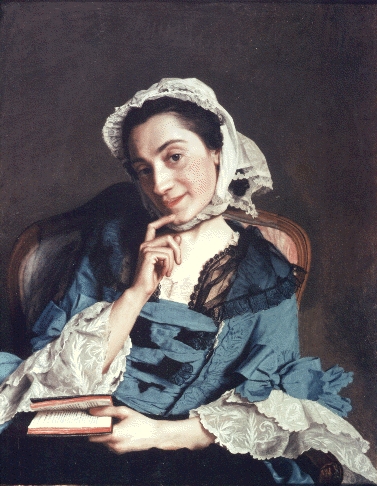
Louise d'Epinay -Liotard - 1759 - HandBound Costumes. HandBound Historical Costumes, Made to measure Historical Garments, 18th century Clothing, Replica costumes adn Reproductions from Museums and Paintings, Re-enactment clothing, Georgian Costume, 18th century Costume Research, Bespoke Replica costumes, Royalty in the 18thc, Key figures in 18th century European Nobility
Mdm d'Epinay by Liotard - 1759

- Madame d'Epinay is also mentioned in Lady Stormont's letters to her sister Mary. Having described meeting some of the Original Salonieres, such as Madame de la Tallien and Madame du Deffand, she now decribed going that same evening to see Madame d'Epinay "who is a great favourite of Lord Stormonts and in the same stile as those I have mentioned. She has some illness that confines her entirely, and the physicians have told her she can never expect to go out of her house again. She is between 40 and 50, looks much younger and rather pretty." This portrait here was painted 17 years earlier than the quote given above that was written in 1776 from Paris.
David Garrick the actor in the 18th century, handBound Costume research, HandBound Historical Costumes, Made to measure Historical Garments, 18th century Clothing, Replica costumes adn Reproductions from Museums and Paintings, Re-enactment clothing, Georgian Costume, 18th century Costume Research, Bespoke Replica costumes, Royalty in the 18thc, Key figures in 18th century European Nobility, studying letters from the 18th century
David Garrick - Gainsborough - 1770

- David Garrick is another celebrity mentioned on these pages. Described in the Duchess of Devonshire's letter to Mary Graham she says: "Mr Garrick is just going to read to us two Acts of Macbeth; I have just got a little moment before he begins to write to you in. " She follows this statement later in the letter with: "I do assure you I have no terms to express the horror of Mr Garrick reading Macbeth. I have not recovered it yet. It is the finest and most dreadful thing I ever saw or heard, for his action and countenance is as expressive and terrible as his voice. It froze my blood, as I heard him and I have scarcely got rid of the dreadful idea yet. My sister's nerves were very much shaken by it. She has been nervous and low all to-day."
Gainsborough-Duchess-of-Devonshire -handBound costumes
Georgiana Duchess of Devonshire by Gainsborough - have yet to find a date.

- As mentioned above there is also a few mentions of the infamous Duchess of Devonshire. but in the two letter extracts mentioned in the book, she sounds quite genuine and, as they would say back then: agreeable. Charles, the younger brother writes here "I have seen the Dutchess of Devonshire, she looks vastly well. All that party wear Fox ribbands and laurels. The prints have amde infamous caricatures of her." With his own political life in full swing, he writes in 1784 of not wanting to be 'intimate with people I have named' as it "would put me in their power more that I wish. I hope I have not offended the Duchess of Devonshire by not going to any political meetings there; if I have, I will plainly tell her my reasons."
Before Mary Graham died, she was visited by Mrs Nugent who wrote a letter describing the conversation they had had. Here Mrs Graham also mentions the Duchess of Devonshire, and I quote (remember this is Mrs Nugent writing) "She resumed the conversation giving the greatest character of the Duchess of Devonshire, 'clever, safe, benevolent'. Then 'Tell her to thank Lady Spencer for all her kindness to me."
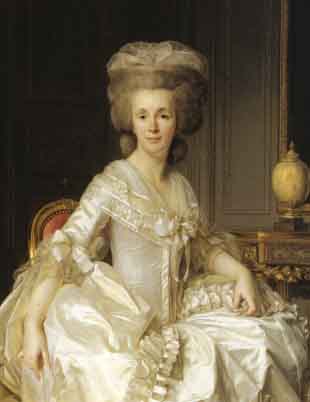
Madame Necker in the late 18th century painted by Duplessis,  handBound Costume research, HandBound Historical Costumes, Made to measure Historical Garments, 18th century Clothing, Replica costumes adn Reproductions from Museums and Paintings, Re-enactment clothing, Georgian Costume, 18th century Costume Research, Bespoke Replica costumes, Royalty in the 18thc, Key figures in 18th century European Nobility, studying letters from the 18th century
Mdm necker - Duplessis - no date

- Madame Necker is another that is often mentioned in the French Society, where her and her husband were part of the Diplomatic circles. Although described as a little boring by Mdm du Deffand they were still obviously a close part of society there in Paris. Lady Stormont writes in 1776 "I supped at St Ouen Saturday; this place belongs to Monsieur and Madame Necker whom the Duchess (Jane Cathcart, the older sister) knows. They are a good sort of people and very civil to us. Madame is a sensible woman, reckoned very clever, in short what is generally called a Bel Esprit, that talks of the Voltaires and Rousseaus, and disputes on this and t'other subject. However, I must say in that stile she is very agreeable, for she does not always talk fine."
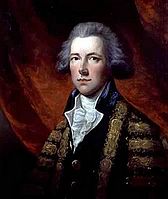
Gainsborough - 1784 - William Pitt - Handbound historical Costumes and research, handBound Costume research, HandBound Historical Costumes, Made to measure Historical Garments, 18th century Clothing, Replica costumes adn Reproductions from Museums and Paintings, Re-enactment clothing, Georgian Costume, 18th century Costume Research, Bespoke Replica costumes, Royalty in the 18thc, Key figures in 18th century European Nobility, studying letters from the 18th century
William Pitt - Gainsborough - 1784

- William Pitt the Younger. Charles, when not off with the Armed Forces, began to shape for himself a political career. It is in his letters that the most in-depth perception of the British Parliament are painted. We know from what the author writes as part of his background that William Pitt appointed him to go to China to open intercourse with that nation. He writes in 1787 "I am very sorry that it is impossible for me to come down to Scotland. You write to me plump about China. I have been instructed not to mention where I am going, but in conversing with you we will suppose that I am going to China - a supposition which should my particular friends put to me I would disavow...". There is also the political side, and Mr Pitts' involvement, in the illness of George III and the Regent's accession into power. Lady Stormont writes in 1788 to Mrs Graham that "Mr Pitt is soliciting addresses to the Regent from all the towns in England to keep him in power. Pray mention without quoting me, that 'you will soon see address for Mr Pitt's continuing Minister, as the letters to that purpose are writing with all Expedition. I fear my brother is too much influenced by living with those people, he does not feel this, but I am sure it is so. There is not the least amendment (in the Kings mental condition) or appearance of it, but it is treason in any person to speak the truth. Dr. Willis, a determined Pittite, is not deceived himself, but he assists Mr Pitt in the deception of the rest of the world."

Tuesday, 11 November 2014

Berrington Hall - National Trust

Berrington Hall

Having had a study session booked to see some of the Snowshill Collection's Stays, we decided to go a day early to have the chance to walk about the National Trust Property first and see what was in the rest of their displays.
In this post we're mainly going to put some of the photos we took of the Pride and Prejudice Displays. The more in-depth study photos from our study session will be done on a proper page for proper perusal and including some of our notes and diagrams. Please see the following links here:
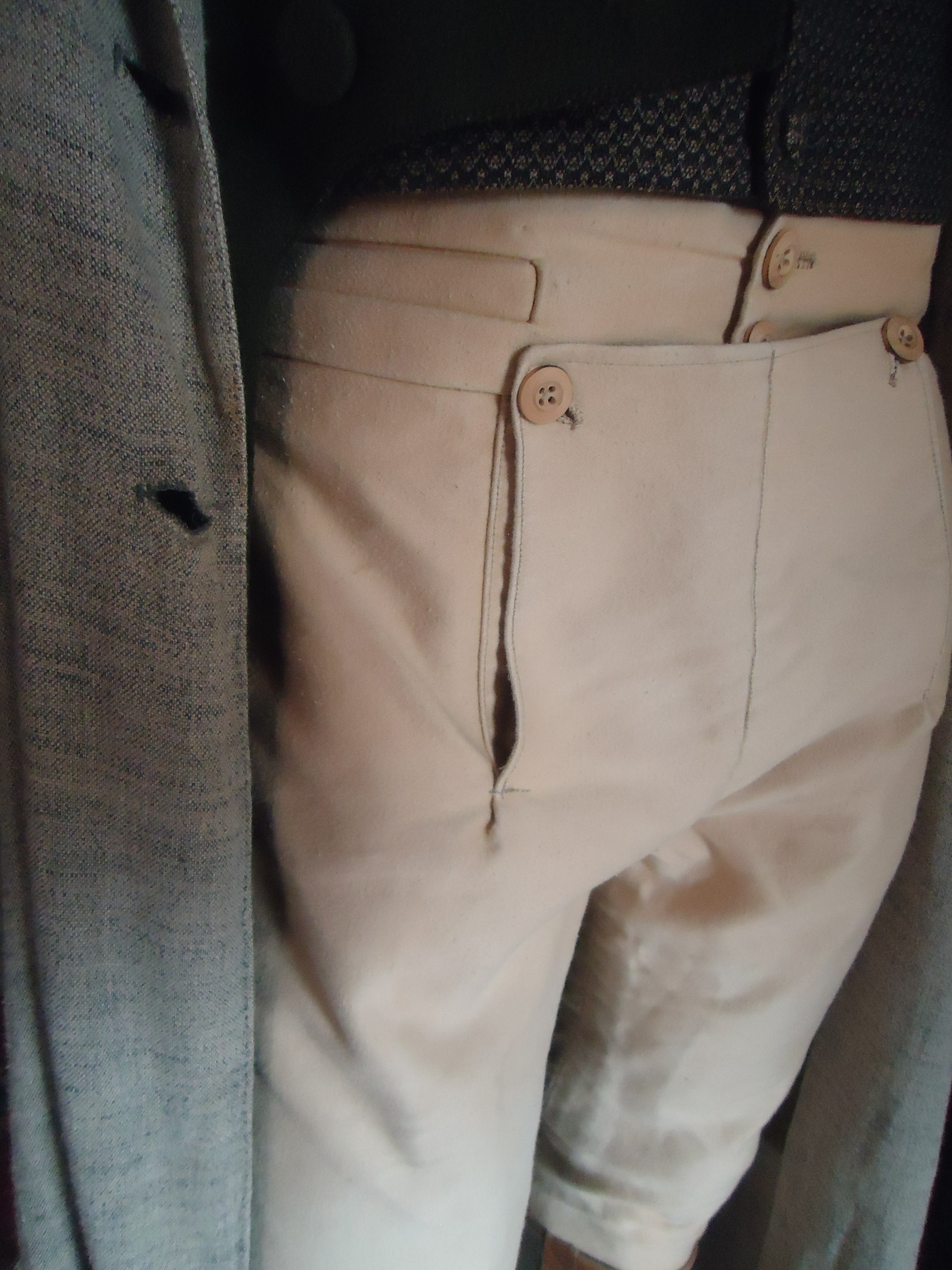
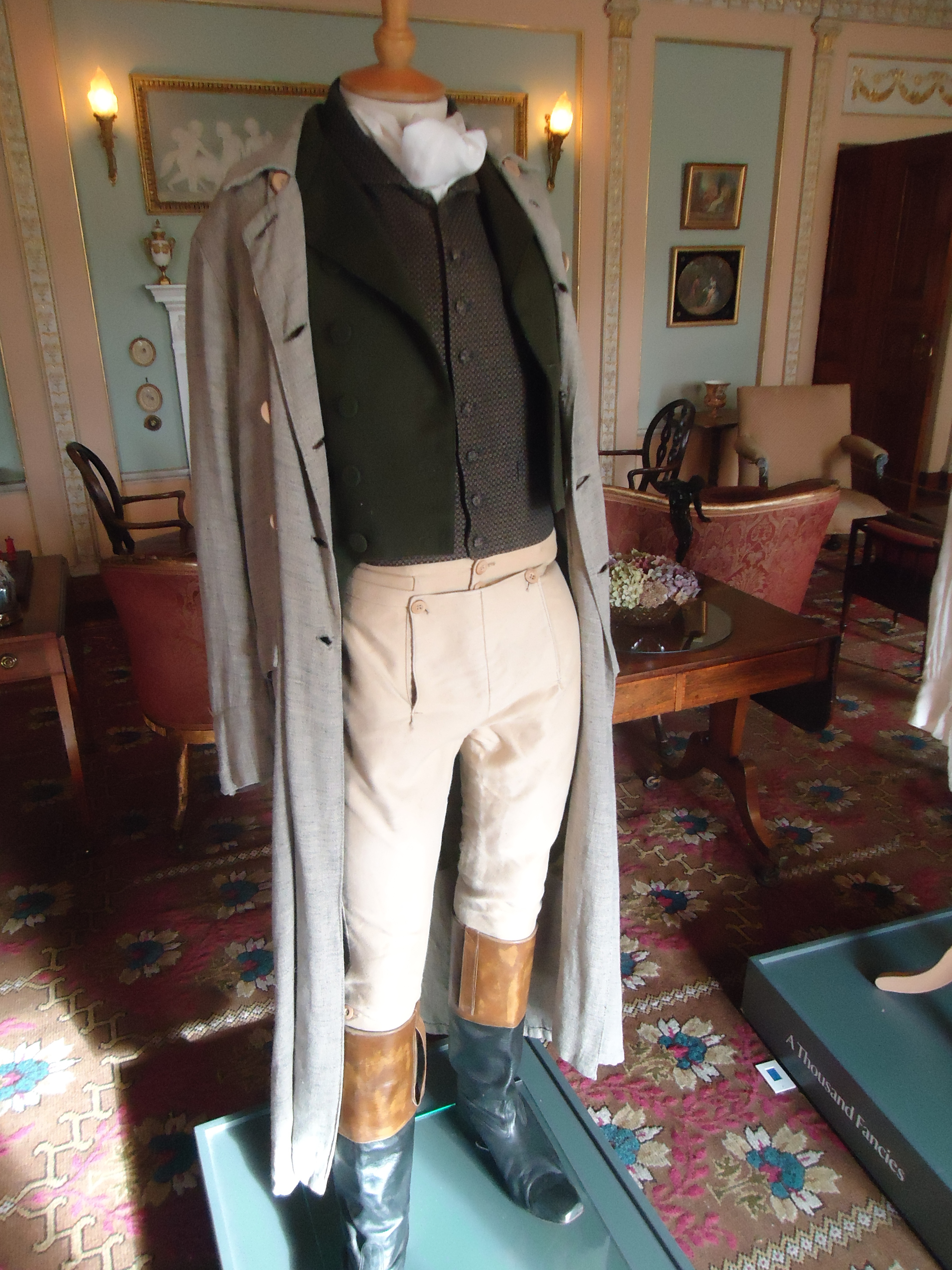
At the moment, being shown to the public are some of the examples of costumes made for the original BBC Pride and Prejudice drama. Mr Darcy's outfit, and most interesting to us, breeches were in the first room you come to.
Berrington Hall - HandBound Research, Tv and Period Drama costumes, BBC Pride and Prejudice Costumes - Mr Darcy, Theatrical ~Period Costume. made to measure period clothing and costume, bespoke historical costumes
Sorry about the slight blurred quality of the photos - my camera is beginning to not deal very well with strong lighting!
Berrington Hall - HandBound Costume Research, Tv and Period Drama costumes, BBC Pride and Prejudice Costumes - Mr Darcy, Theatrical ~Period Costume. made to measure period clothing and costume, bespoke historical costumes We're just beginning to research 18th century breeches to a deeper level so seeing these was quite interesting. They seem beautifully made and it would have been lovely to be able to have a look at the inside detail of the Waistband Welt Pkt. Having sampled a pair of breeches, as usual, loads of questions cropped up - therefore it is interesting to see another persons interpretation of an original garment.  Their Welt sits indented in with top-stitching around the pkt on the waistband. We've copied the basic pattern from a pair in the Bath Fashion Musuem Collection and our sample had the welt pocket sitting out on top of the fabric as on a jacket. It's highlighted the possibility that either there were two ways of putting in a pocket or the fashion and technique had changed in the 50 years from our breeches to the ones this reproduction was based on.   On our blog we have a whole pageMr Darcy's shirt - HandBound Costumes personal Research,Berrington Hall - HandBound Costume Research, Tv and Period Drama costumes, BBC Pride and Prejudice Costumes - Mr Darcy, Theatrical ~Period Costume. made to measure period clothing and costume, bespoke historical costumes
designated to the Breeches we saw at the Bath Fashion Museum - please click here to be taken to view that page.
On the next mannequin was Mr Darcy's shirt and again it is actually wonderfully made. there's a nice CF opening detail to it and it'd be interesting to see their notes on it and if this shirt was based on an original.
These costumes were on display in the first room and you can see this room large and spacious in the background.
Below, continuing in the Pride and Prejudice theme are some of the ladies costumes including one of Miss Bingley's dresses.
P&P Costumes - Berrington - HB Research

Pride and Prejudice Costumes - HandBound Research, Miss Bingley's dress - HandBound Research,Berrington Hall - HandBound Costume Research, Tv and Period Drama costumes, BBC Pride and Prejudice Costumes - Mr Darcy, Theatrical ~Period Costume. made to measure period clothing and costume, bespoke historical costumes
In the above image you also have one of Elizabeth's dresses - here you can see just the attention to detail in the arrangement at the hem of the dress and the fine work of the bodices. They really quite stunning and somehow look nicer and more real here on the mannequins than in the programme.

Thursday, 12 June 2014

Study of a Painting: James III - July 1747

A Study of a Painting:

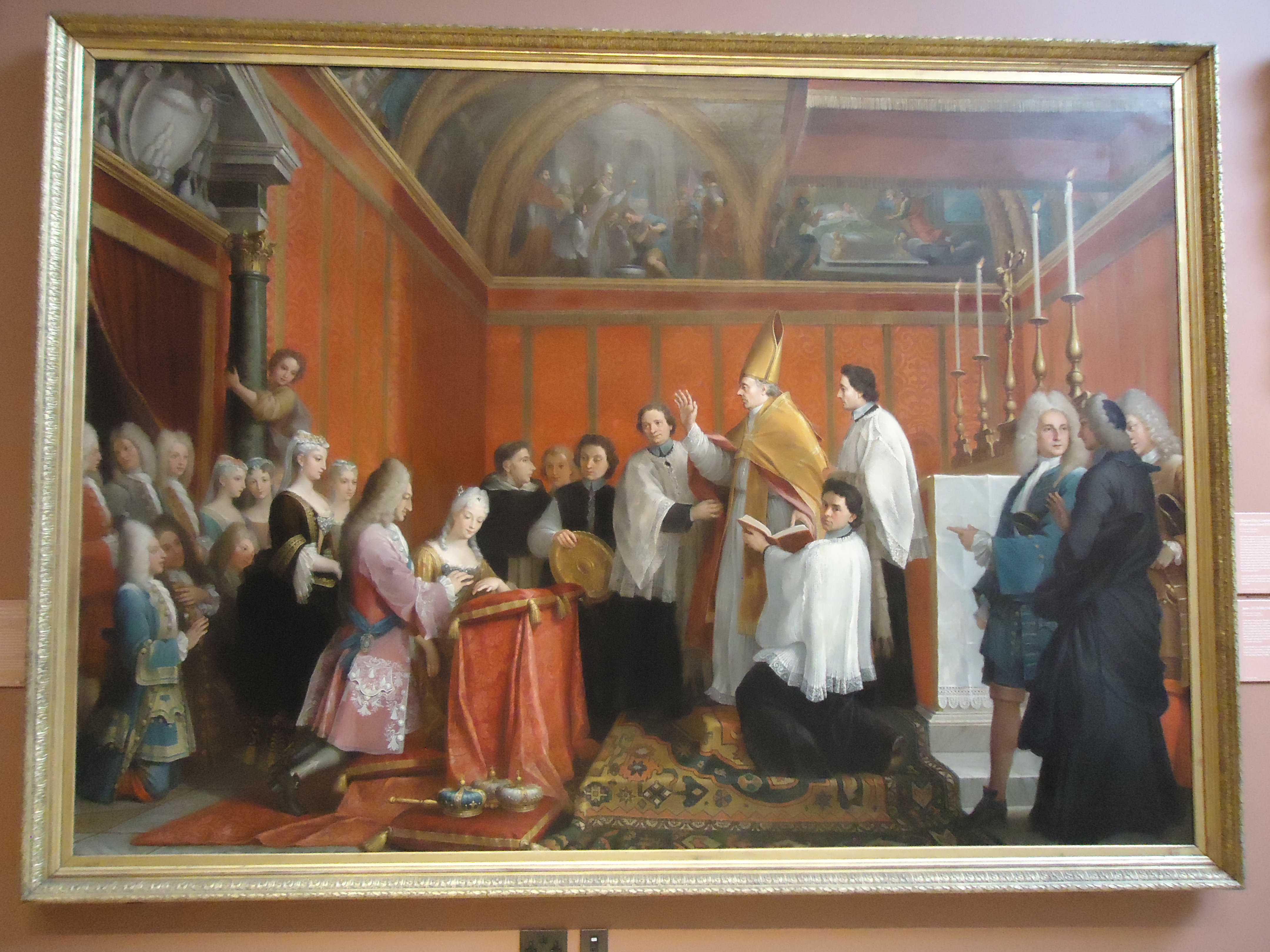
James III and his Son Henry Benedict - Monaldi, Pubalacci and 'Silvestri' - July 1747
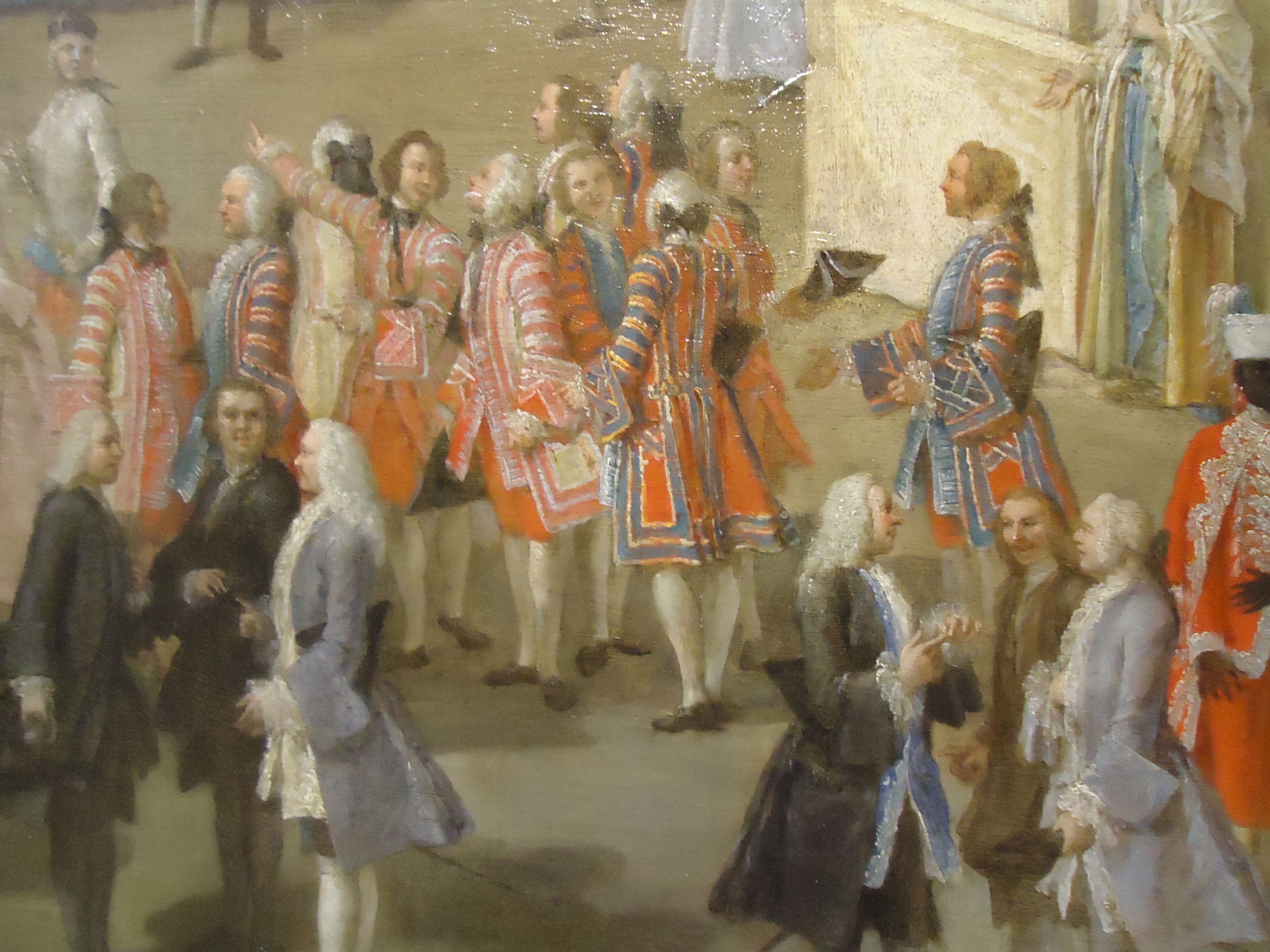
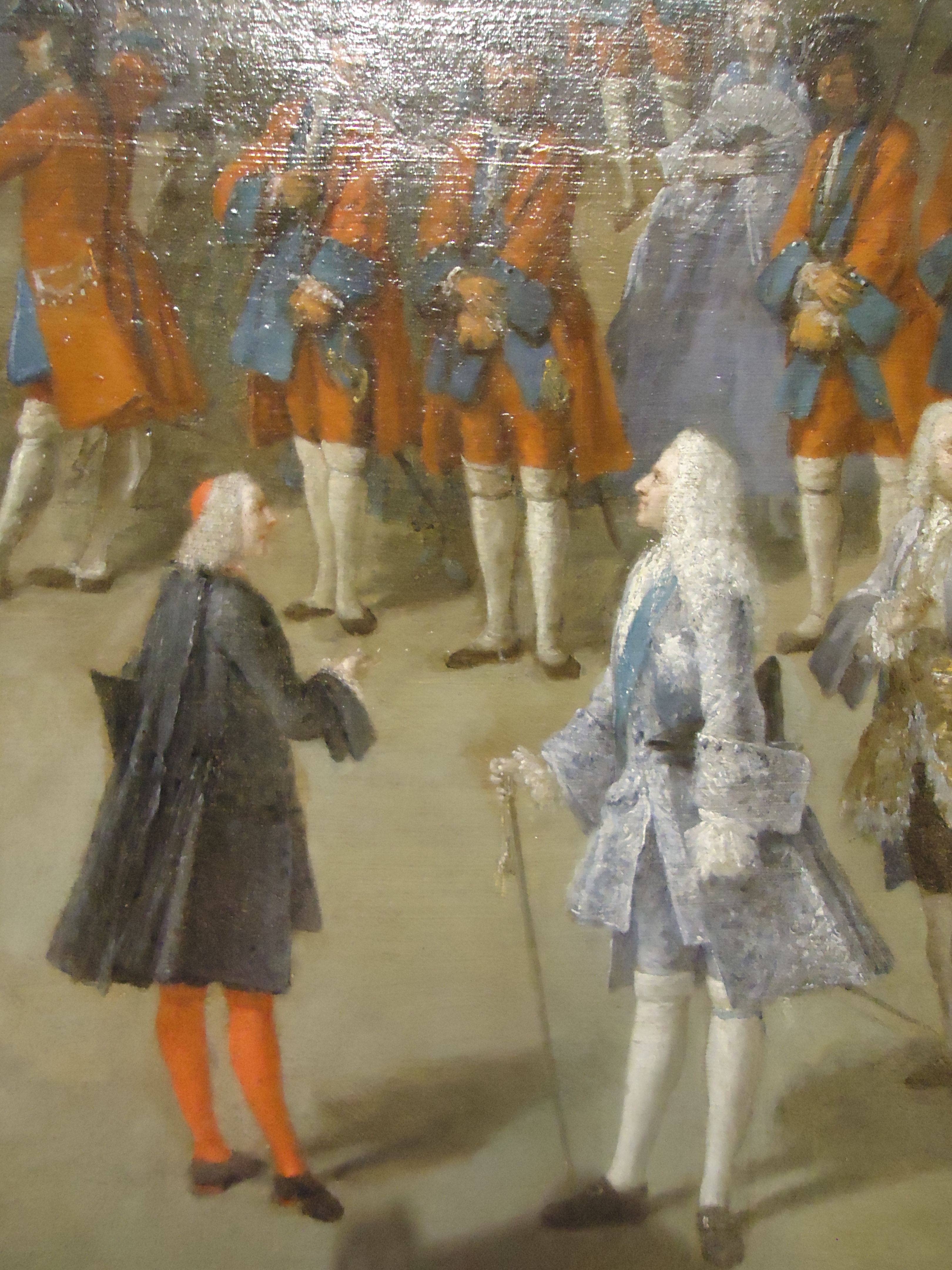
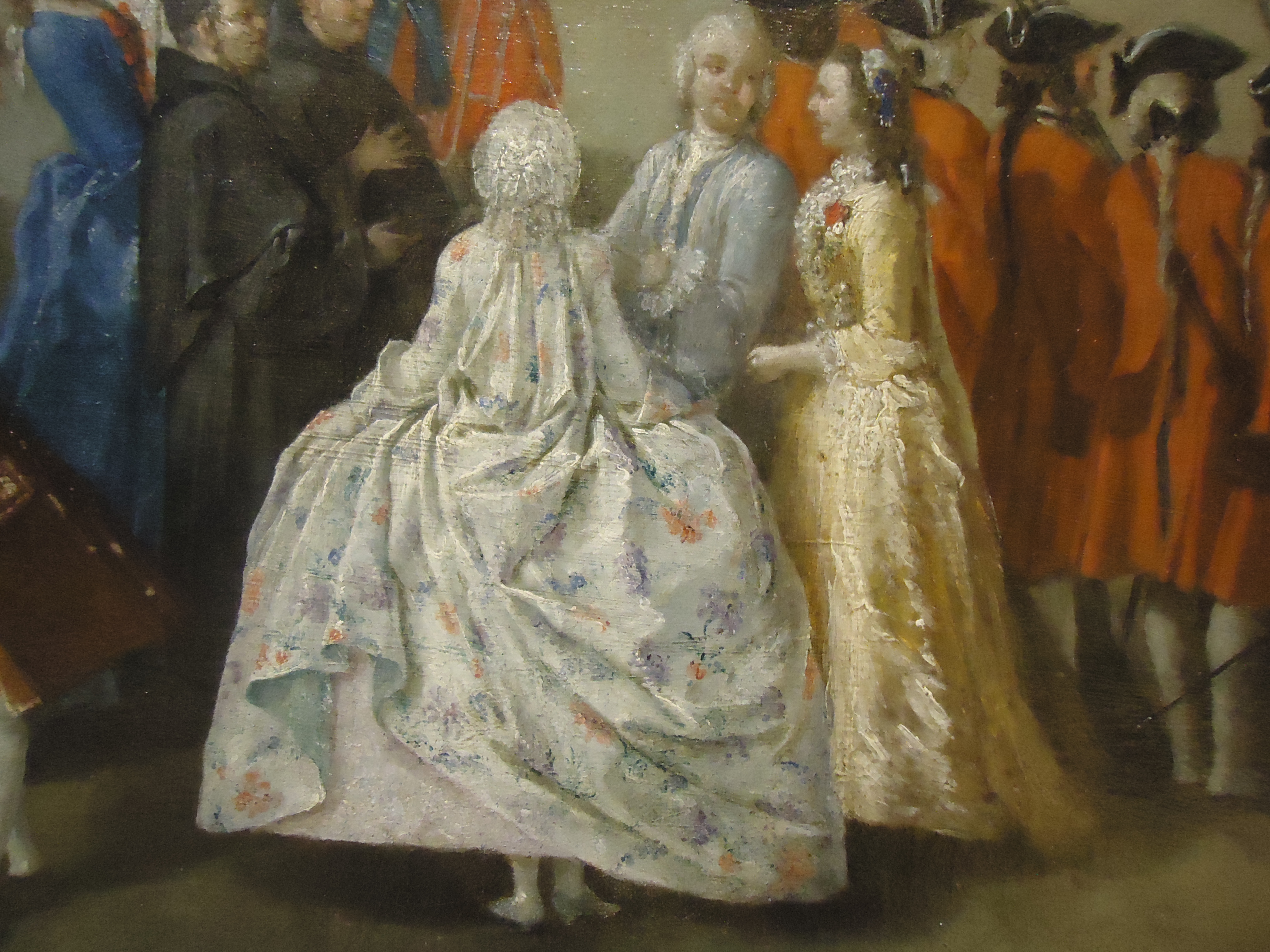
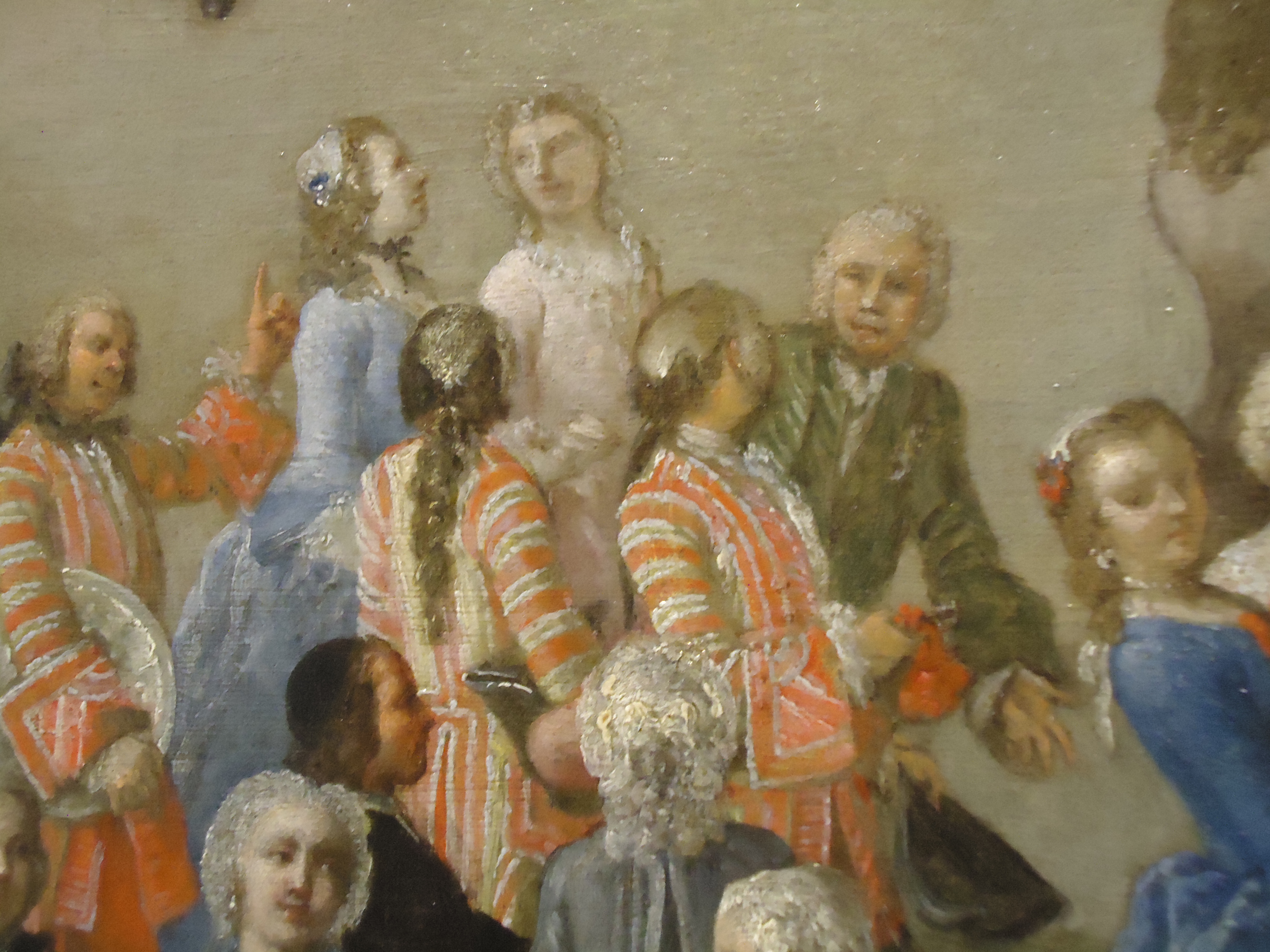
Hanging in the National Portrait Gallery in Edinburgh, spanning a massive part of the wall is this incredible painting. The crowds in the background contain people from all walks of life: monks, soldiers, normal people looking on, the fashionable, the elite and the poor. It has people hanging out of windows, walking through the corridors and all in all containing some interesting costume details from the period.
The Old Pretender James III by Monaldi in July 1747, HandBound Costume research, Made to measure historical Costume, Jacobite clothing research, Eighteenth Century Historical Costume Research and bespoke garments, wide pannier dresses, robe a la francais and the wide side hoops, court wear for the mid 18th cent and 1747, Royalty and what they wore, close-up and details of paintings form the Georgian period, Costume in paintings from the eighteenth century, what the Georgians wore, Custom made 18th century costume, rococo dress,
The Painting depicts the meeting of James III (The old Pretender) and his second son Henry Benedict, celebrating his becoming the Cardinal Deacon. It is a massive painting and easy to just stand in front of and simply oggle.
- To our modern eye it seems strange that James III and Henry Benedict (who declared himself HenryIX in 1788 after his brother died) don't stand out more in the painting, neither their costume nor their size marks them out. I had trouble spotting them, even with the description supplied by the Musuem, as they are neither central nor clearer than those surrounding them. I admit that I am no Art Historian and certainly lack the very specific knowledge of being able to read a painting, but it is possible that the King and his son's apparent nondescript nature was purposeful. The plight of James III (The Old Pretender) and his sons was not always supported and could've been seen as weak and a bit of an embarrassment and hence the strangeness of the crowd and the seemingly undemanding state of these two important figures. We know, for example that Henry Benedict felt embarrassed when sent by his older Brother (Bonnie Prince Charlie) to France to drum up support and finances so it could be that the largeness of the building and some of the indifference of the crowd is reflecting this issue.

Close up Details:

Painted outside the Stuarts Palace in Rome, this painting appears to  show close up features of both general European fashion (based on English and French fashions) and also particular local fashion popular in Rome.
JamesIII - Monaldi 1747 - HandBound Costume Research, eighteenth century costume research from paintings, handbound costumes study in georgian cothing for made to measure historical garments, civil war re-enactment research, court wear for the mid 18th c, what the georgians wore, large side hooped robe a la francais,
Image no.1
Details of the above:
- The striped nature and tassled design of them suggests that this style of head dress be perhaps distinct to Italian trends and we've certainly not come across this look in English portraiture.
- Crosses were also, very rarely seen in English fashion as a form of neckwear for this period.
- These ladies jackets have a military style to them, not a far cry from our Riding habits and the front lady seems to have a long pocket opening in her skirt. This, though, could be just an attempt at painting a crease in the skirt that sits slightly wrong.
- They also have their neck cloths tucked in differently to what is normally seen in English paintings.
- Their skirts appear to have braiding trimmed on the edge and as decoration.
JamesIII by Monaldi - 1747 - HandBound Costume Research into eighteenth century wear, studied and replicated historical garments, resource images and close up details from paintings for studying georgian costume, bespoke re-enactment clothing
Image no.2
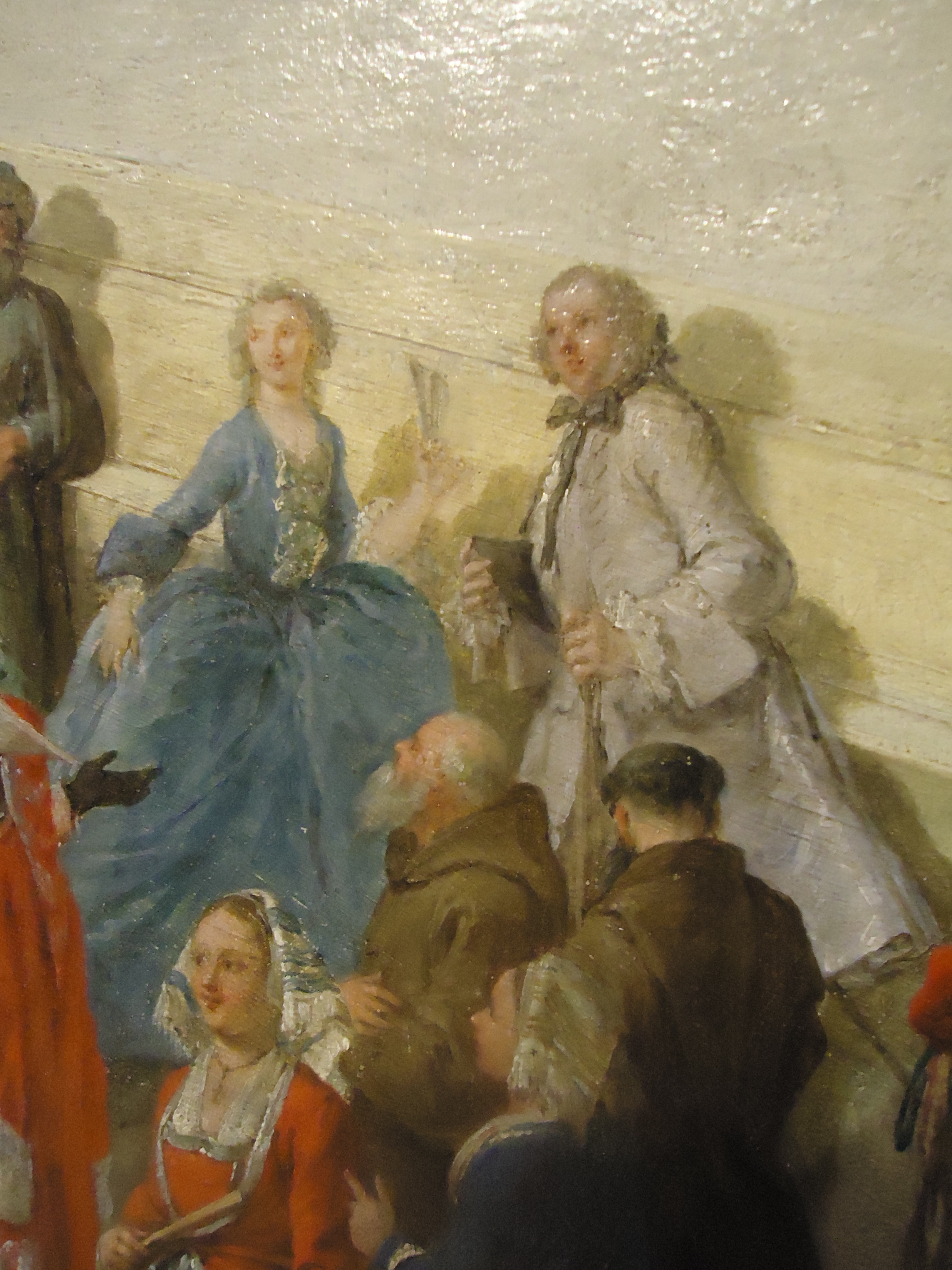
Details of the Above:
- The Pale Blue lady in the centre of this image is wearing a large side-hooped dress. Although it is unclear if she is sporting a Robe a l'Anglais or a Robe a la Francais, it does seem to be quite generously gathered at the CF. This style of skirt fades out of popularity in English and French fashions the further you get into the eighteenth century and is beginning to be less seen at this time, possibly a little earlier than this even if we're honest. There are many images  of ladies with full fronted skirts in around the 1730's - 40's and feature quite highly in Hogarth's paintings.
- She also has a large Separate Cuff Sleeve which again was popular about this time but this too begins to drop from fashionable about this date.
- Her friend with his grey suit is a lovely example of what was fashionable in men's clothing for this date. His large black bow at his neck, his gathered lace ruffle and wide, almost held out Coat skirts are all prime examples of men's clothing and he ties in very closely with some of Hogarth's drawings for this period. What we've done is we've created a page especially for this Study that shows the examples of Full Skirted dresses and the Men's coats Painted by Hogarth. This can be used as Comparison Aid to see what was being depicted in English Fashion at about the same time and be able to get a better view of 1740's fashion. Please click on this link here: Hogarth: A Comparison Aid.
JamesIII by Monaldi - 1747 - HandBound Costume Research, close-up details of painting showing plebeian wear in 18th century, replica costumes, child's 1700's clothing, examples of long aprons, costume research for 1700's
Image no.3
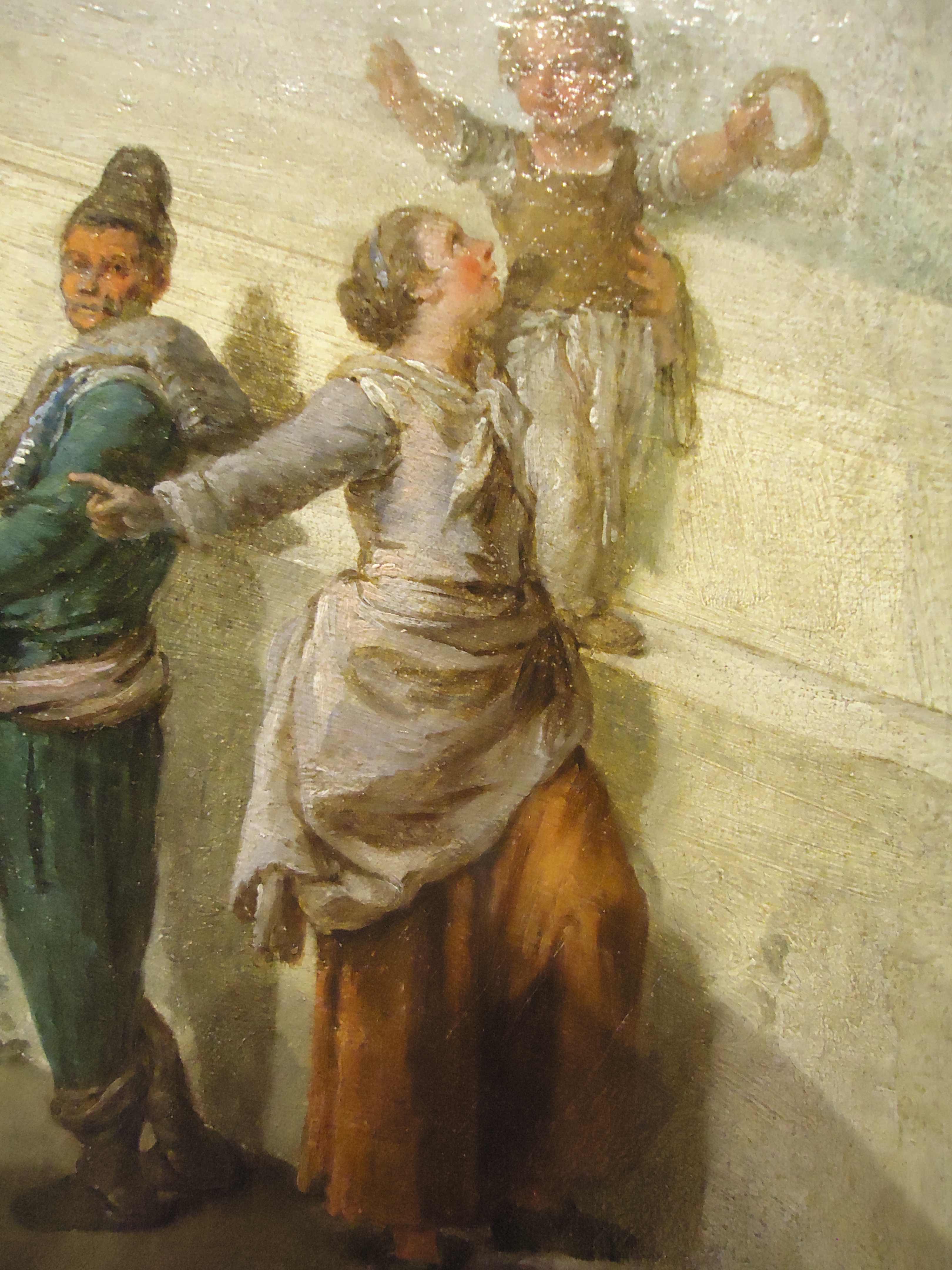
Details:
- Considering that this lady in the above image, and those around her are just background characters, it's incredible at how much detail the artists have painted them with. We have a complete question mark over the man in green standing next to her, with his hair looking as if it's tied up in bun and his green clothing (perhaps if any of you out there are studying specific Italian local costume you might be able to help us here) which means we can't do much but just point him out to you.
- But the lady and her child are a bit more easy to define. She wears a long brown petticoat with a vague lighter colour Sleeved bodice/jacket/dress as the top section. the very full white section that is draped around her and tucked up could well be an apron. This fashion of draping either the top skirt or the apron like this is easy to confuse with the romantic style of paintings trying to imitate Grecian gods, but this is actually a fairly common style for working women. There are many images where working women have the same look and we get the impression that it was possibly easier to work in. We have some more images with ladies dressed similar to here in our Whalebone Stays: Who Wore Them article, please take a look.
- It's unclear as to if she's wearing a pair of stays but she does have a similar coloured neck cloth round her shoulders and a pale blue ribbon in her hair.
- Interestingly she is not wearing any form of headdress. The child looks to be in just a long shift, possibly a skirt of some kind (boys wore them too) and a pair of brown bodies.
- The child is also clasping a hoop of some kind.
James III by Monaldi - 1747 - HandBound Costume Research (6)
Image no.4
Here again you have several views of fashionable men and the details that were in particular fashion at the time. According to several fashion historians, men were almost trying to match their ladies wide dresses with the width and fullness of their coat skirts. These could even have wire in them to make the spring out sharply. Details that were in particular fashion were:
- Wide Deep Cuffs on the Sleeves
- The body of the jackets were still fairly baggy and had not reached the very fitted neatness of the coming decades
- Full skirts with heavily pleated vents - possible wire for shape.
- Thin, napier style swords, sticking out under the skirts of the coat.
- Tended to be collarless
- Long Waistcoats
- This is also the period when stockings start getting worn under the breeches, However the front left man seems to have his folded over the top, perhaps the fashion was a bit later in reaching Italy.
James III and Henry Benedict by Monaldi and Pubalacci - 1747 - HandBound Costume Research (7)
Image no.5
Details:
- Ok, well for starters there's another example of a Bag wig right at the bottom of the image and in the centre.
- We also have a lady in Pale blue wearing a style of cap very similar to Mary Edwards on the Hogarth: An Aid to Comparison page. We don't really know if this is a specific cap or just a specific way of wearing what looks like a Mob cap with lace on it which gives it this indentation at the CF of the head. Perhaps it's more deeply frilled than later examples.
- She is also sporting a fine pair of Wing cuffs and large lace ruffles.
- The gentleman with her is mostly hidden by the way but wears a slightly deeper blue and the same sort of wig featuring in other areas of this painting.
- The working men coming through the archway behind them are mostly in dull colours which is very typical for their status. The one bent over double with his carriage is wearing fairly light coloured Stockings and ironically appear to be tucked in. He was obviously a bit of a Dandy at heart or it was more of a practical arrangement for working men to have their stockings tucked in. he also appears to be in just a shirt and wears a long functional apron.
- His friend is dressed similar but with what looks like a round hat shaped to look like a Tri-corne.  We may be wrong in this.
- The ladies coming behind in the corridor, although blurred, are all in fashionable colours, yellow, light ivory and the pale to mid shade of Blue.
JamesIII by Monaldi - 1747 - HandBound Costume Research (9)
Image no.6
Details:
- The front two guards are both wearing their stockings folded over their breeches. They wear Tricorne hats and the blue and red uniform that features very highly in this painting. We wonder, is that because it is a Scottish colouring or Roman?
- The lady and gentleman coming out of the archway both wear pale blue, although the gentleman is wearing his with a brown jacket and brown breeches. The lady has an Echelle detail (french for ladder and which describes that bows placed down over the stomacher in a ladder formation).
- the lady in the bottom front with the guards has her fan out and again it representing the fashionable colours of pale blue and white/ivory. She is also wearing that same cap with the CF indentation. As is the lady in the middle.
- The lady with her back turned to us at the back, in pale pink is also wearing a female version of a Bag Wig and is in a Robe a l'Anglais. She has deep Wing cuffs.
JamesIII by Monaldi - 1747 - HandBound Costume Research, fashions in the 1740's and images of them, mid 18th century costume, court wear for the 18th century, Middle class costume, poor people and what they wore in the goergian period, period and historical costume made to measure, 1700's Costume inspired by the paintings, Historical costume research, teh really wide side dresses, pannier dresses, examples of the wide side hip dresses, what colours wre fashionable in the  mind eighteenth century.
Image no.7
Details:
- Drum roll please because here stands before us the two key figures this whole painting is created for. James III stands in a pale blue silk 3 piece suit. He has fairly baggy sleeves and a large, broad cuff with wing detail at the side. The cuff has covered buttons along the top.
- The skirts of his jacket stand out sharply and have pleated vents.
- His waistcoat is long and broad and buttoned down to just above the pockets flaps. His breeches don't tell us much, the interesting bits are hidden by his stockings which are folded neatly and quite deeply over them. He has a pale blue garter round his left leg. He has full white lace ruffles sprouting beneath his cuffs and he wears the blue sash of the Garter and the Star. He wears black shoes with buckles. He also carries his black tricorne hat under his arm and wears a long white wig (Possibly a Full Bottom wig - but we're not too hot on wigs!)
- Henry Benedict is apparantly in an outfit that Cardinals often wore when not in their full robes. Interestingly he has red stockings and the cardinal's red cap.
- All the soldiers behind them have stockings over their breeches. and garters holding them up.
- There's a lady in the background holding up her fan who is wearing a pale blue sack with the wide hips. We love seeing these dresses in paintings, looking so contrastingly normal and yet so strange to our eye.
JamesIII by Monaldi - 1747 - HandBound Costume Research, images of the sackbakc gown with wide side hips, 18th c. robe a la francais, examples of the looser sacks of the mid eighteenth century, floral silks in the watteau pleat. light coloured silk suits of the mid 18th century, monk images, wing cuff details
Image no.8
Details:
- This is probably, for us at any rate, the most exciting close-up. We love this lady with her skirt all caught up.
- WHITE DRESS:
- First off we love the fabric, secondly it's interesting how hard and stiff looking her petticoat looks and makes us wonder if this is less a 'caned underskirt Hoop' and more a caned actual petticoat - except for the fact that she has no lines going across the fabric but that could just be the painting's fault. We know from Norah Waugh's research that the boned underskirts could be made from dress materials and were designed to be part of the ensemble and not just a hidden canvas hoop, especially, it seems early on. However as we cannot tell it's nothing but an interesting point.
- She wears white stockings and light coloured shoes.
- Her sack is also of the really loose early versions, though it does not look too wide at the neckline it is certainly is less controlled than the later examples.
- YELLOW DRESS:
- The colour of the day it appears. The Cunningtons quote from an article written in 1744 that 'Her gown and petticoat which were yellow, the colour so much the mode in England at present.'
- She too appears to be in pannier (wide side hoops) but as she is facing us as a side angle it's a little harder to tell. It is a Robe a la Francais or a 'Sack Back'.
- She appears to have a white lace/furbelow/fabric twisted neck decoration which seemed to be quite a popular trend during this period. The lady to the left in 'A Taste of the High Life' is wearing one although we're sure we can find a better example than this black and white engraving - bare with us on this one.
- She also has cuffed sleeves that aren't too big, a hair decoration in blue adn her own hair colour.
- LADY IN BLUE (far left)
- Even though we only get a small glimpse of this lady, her gown is quite striking. It's quite a strong blue, it's an Anglais (Robe a l'Anglais) and is decorated over the front Stomacher with red bows in the 'Echelle' formation.
- She has fairly deep and prominent Cuffs and is wearing her own hair.
- Her skirt also appears to be 'polonaised' slightly, although we use this term lightly: the true polonaise didn't come in til the 70s but dresses from way before this could be 'polonaised' or 'pulled up' by either drawing the end of the skirts through the pockets holes or having ties in the actual dress.
- BROWN SKIRTS OF JACKET (far left)
- We're only even mentioning this guy because it is such a clear example of how exaggerated men's jacket's skirts could get with the wire and stiffening made for them. It has been pointed out that they were trying to keep up with the women's wide dresses. - oh and he wears white stockings.
- MAN IN BLUE SILK:
- This gentleman wears a white wig, has a white cravat and a matching suit by the look of things. It is possible that his waistcoat is a tad darker in colour
-He has a collarless jacket, deep-ish boot cuffs and lace/lawn ruffles at his wrists.
- The Soldiers beyond them all wear black tricorne hats with silver braiding, white stockings and pig tails wigs of various tones.
James III by Monaldi - 1747 - HandBound Costume Research, eighteenth century costume research for made to measure historical gowns, Robe a l'Anglais, early examples robe a la Francais, images of sack back gowns, militia uniforms in the 18th century, what colours were in fashion in the 1740's and mid 18th century, did the fashionable only wear wigs, wigs vs natural hair, bag wigs, examples of the origins of the word necklace, boot cuffs, echelle ribbons, wide side hip dresses, the jacobite royalty, who was the old pretender, was there an a james III of England, examples of plebeian clothing in the paintings for 18th century, what working people wore in the georgian times
Image no.9
Details:
- In this image we can see the lady in the mid blue dress again and a bit better and she appears to have some sort of white thing hanging down her back neck. She also wears a pearl necklace.
- The soldier holing the silver platter wears an example of the bag wig whose black ribbon also tied around to the front of the neck. Iris Brooke observes that this could have been the start of the bow tie.
- It's hard to tell sometimes if a cap is an Mob cap or a Pinner as the main difference was that the Pinner was less shaped about the crown whist the Mob had the 'puffed out crown' - Cunningtons. In their book: Handbook of English Costume in the 18th Century, the Cunningtons do mention that Pinners were narrow about the forehead. We could then class the frilled 'Head' (contemporary term for any form of head dress) on both Mary Edwards on the Hogarth page and seen above here in many of the images as Pinners as they have that centre indent, except the fact that one of Hogarth's servants wears a Mob Cap and she has a fairly narrow bit about the forehead that could be recognised as an 'indent'. It seems it's gonna have to be one of those 'more research needed' subjects. The lady in the very light pink could be wearing either of these. Where as both ladies in blue have some sort of small Pinner attached right at the top of the crown and both with a flower or a ribbon of colour.
- Both back ladies have frills about their neckline whilst the lady in the mid blue seems to have none.

Wednesday, 4 June 2014

Edinburgh National Portrait Gallery

National Portrait Gallery:

Edinburgh

We had a Study Session booked at the National Collection Centre in Edinburgh last week. So off we set, across the country to have a look at some Eighteenth Century Stays, Shifts and Hoops. On arrival into Scotland we found we had a free half afternoon and straight away we went to the National Portrait Gallery and the National Gallery. Time well spent!
Here are some of the paintings we were allowed to take photos of:
Queen Charlotte -c.1763 - Ramsey - HandBound 18th C. Costume research, royal court wear for the eighteenth century, research into 18th c. costume, made to measure historical inspired costumes, Edinburgh National Portrait gallery, Scottish Collections, Allan Ramsey, Coronation Gown images of Queen Charlotte
Painted by Allan Ramsey in about 1763. Here stands Queen Charlotte, wife of George III in all her regalia. She wears a stiff bodied gown very much in the style of the previous century. This must have been incredibly heavy to wear,
George III by Ramsey c.1763 - HandBound Costume, national portarit gallery of scotland, costume research, a look into goergian court wear, made to measure eighteenth century costume
Here is the second in the matching pair of the Coronation of King George III. Again, painted by Ramsey in about 1763.
Details include really deep and wide Cuffs, Stockings under the breeches which come just below the knee.
- Waistcoat in matching fabric with the buttons all done up down to waist.
- Coat appears to be caped with a shoulder cape and trimmed with ermine.
- Cloak is pale blue with gold border and oodles of ermine.
- Pale Blue stockings.
Below is a close-up of his breeches with a Button Fly.
Button Fly - George III - HandBound Costumes, Royal Portraits and their costumes, Breeches with button flies mid eighteenth century, men's historical costume and georgian costume, mens breeches and how they were cut and sewn and worn, 18th century made to measure costume research

Earl of Morton and Family - Davison - 1740 - HandBound Costumes Research, family paintings from the 1700's, clothing worn by women and their children, an example of a child with a doll, a boy in skirts and the eldest breeched, georgian clothing researched into by handBound Costumes, custom made replica clothing for reenactments or theatre,
 Details:
- This above painting is of the Earl of Morton with his Family. It is by Jeremiah Davidson and was painted in 1740.
- Some interesting features include an example of a boy in skirts before he was breeched ( a lady at the Scottish Collections Centre suggested this was about 4-6 years of age). He is the second in on the right and is handing his older brother an arrow. He also wears a kind of jacket over the top with elaborate frogging. His brother has a collarless jacket on and a nice example of a functional button-cuff.
- The middle girl is holding a sweet and rather clear example of a child's doll and also has the top of a red shoes slipping out from beneath her gown.
- The Mother wears what looks like a Round Gown and a cap with lappets that are pinned under her chin. She has a treble pinched grown on cuff and rather plain ruffles.
- We have some close-up details of this painting coming in a future post or viewable on our website (it's not been done yet but we're getting there!)
James Boswell - Willison 1765 - HandBound Costumes - National Scottish gallery Boswell, eighteenth century costume research, men's historical costume made to measure georgian clothingJames Boswell - by George Willison 1765.
Interesting Details:
- Another example of this fashion of not fully buttoning up the waistcoat around the waistline area and having a tuft of shift sticking through it. This is visible on more than just one portrait and therefore less likely to be just an accident. However it could be a standard way for artist's to show it as a relaxed portrait rather than a stiff, formal one.
- He has a Tricorn hat in his hand, a fur lined jacket and maroon breeches and matching waistcoat with gold trim and buttons.
- Black Cravat with a high-necked collar shirt.
The Old Pretender James III by Monaldi in July 1747, HandBound Costume research, Made to measure historical Costume, Jacobite clothing research, Eighteenth Century Historical Costume Research and bespoke garments, wide pannier dresses, robe a la francais and the wide side hoops, court wear for the mid 18th cent and 1747, Royalty and what they wore, close-up and details of paintings form the Georgian period, Costume in paintings from the eighteenth century, what the Georgians wore, Custom made 18th century costume, rococo dress,
Details:
-  James III Congratulating His Son Henry as Cardinal by Monaldi, Pubalacci, July 1747.
- We've actually done a whole page on this painting because, although it doesn't look that big here, it's actually massive and the crowd contains a whole realm of detail of costumes. Please click on this link here if you wanted to see the close-ups on 'A Study of a Painting: James III by Monaldi - 1747' which is situated in our  Customer Library on our website at http://handboundcostumes.co.uk/customer-care/customer-library/study-of-a-painting-james-iii-and-his-son-henry-benedict-monaldi-pubalacci-and-silvestri-july-1747/
- Wide Pannier Robe a la Francais Dresses, Rome fashions with striped headdresses and examples of Plebeian costume, all within the crowd.
Baptism of Charles Stuart - Antonio David - 1725 - HandBound, historical costume research into 18th century fashion, 1720's costume images, Bonnie Prince Charlie Stuart christening,  mob cap with lappets images from georgian headdresses,  clocked stockings and examples of ceremonial colours and fashionable colours for stockings,  examples of georgian mens costume in early 1720's, womens costume in early 1720's, made to measure period clothing, historical bespoke costume
The Baptism of Charles Stuart - Antonio David - 1725
Details:
- Here are some prime examples of caps with long, narrow and straight lappets. The only ladies that are wearing caps are on the left hand side of the painting, behind the Clergy. I don't know if there is any siginificance to this or if it is just chance but all the ladies here are wearing two-layered caps with two layers of lappets.
- We've got some close-up studies of this painting in our Customer library entitled A Study of a Painting: Baptism of Charles Stuart - please click on this link and take a look at our notes and the details of the costumes of the ladies behind.
Alexander Murray of Elibank - Ramsey - 1742 - HandBound Costume, Mens georgian costume research and images, mens styles of fashion throughout the eighteenth century, historical tailored costume, Bespoke Tailored Georgian Clothing
Ramsey - 1742 - Alexander Murray of Elibank
Details:
- High neck cravat wkith frill hanging down.
- Possibly natural hair styled similarly to a wig.
- Black Jacket with Red Fcaed collar and gold braid/embroidery.
John Campbell - 4th Earl of Loudoun - Ramsey - 1747 - HandBound Eighteenth Century Costume Research, Close-up study of painting, mens fashion in the 1700's, mid-eighteenth century mens costume, bespoke historical and period costumes for men
John Campbell - Ramsey - 1747
Details:
- Nice example of the looser sleeves that tightened as the years went on.
- Finer braid, white wig and with a hat tucked up under his arm. Also wears high-necked white cravat with frill.
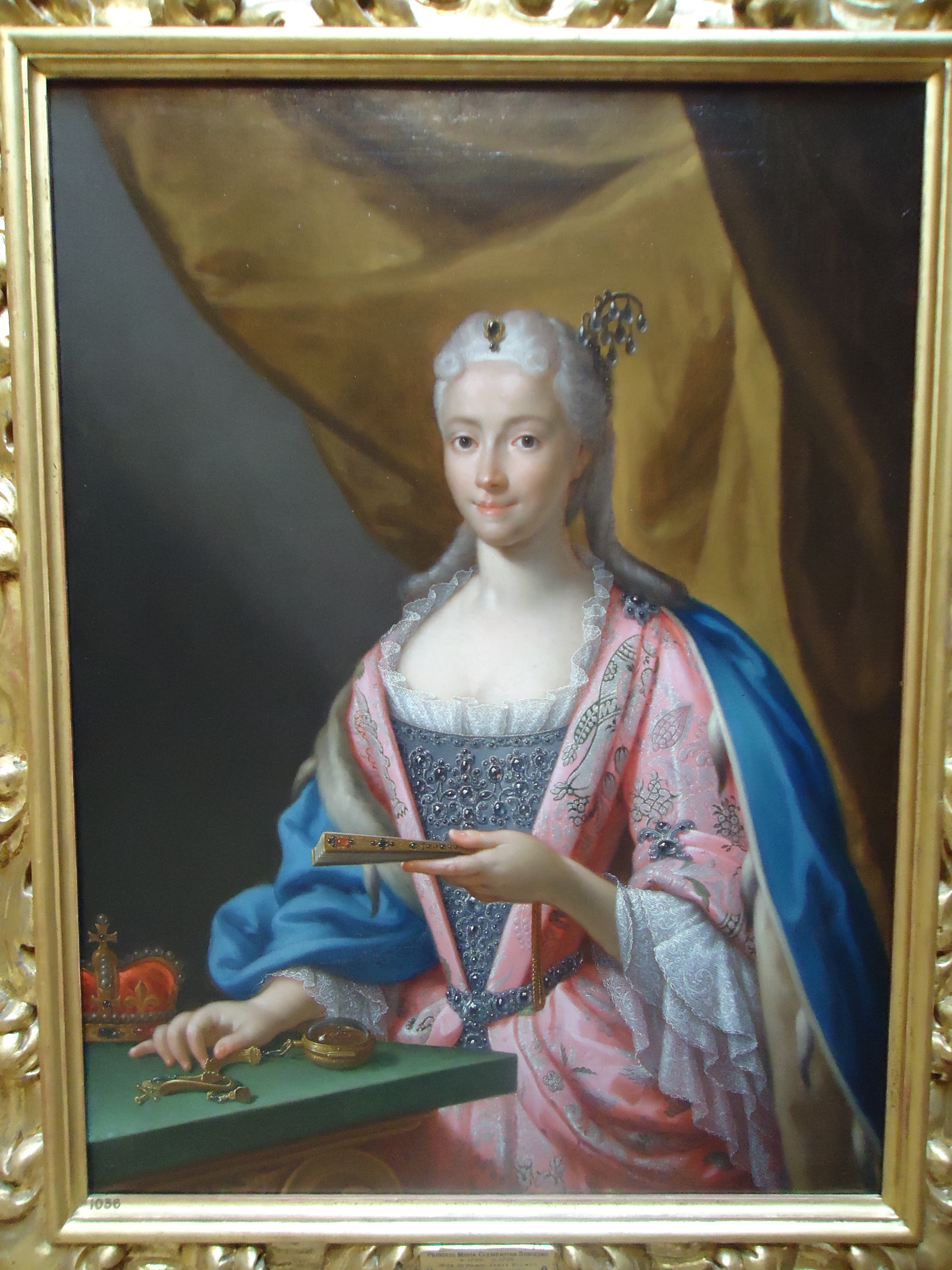
Maria Clementina - by or after Trevisani - 1719 - HandBound Costumes, 18th century court fashion and royal portraiture, Stiff bodied gown and early 18th century costume, court mantua with stones,
Maria Clementina - Trevisani - 1719
Details:
- Floral silk Soft-Bodied Mantua Gown over Stiff stomacher beaded with stones. Belt round waist is also set with stones.
- In these dresses you can easily see the development of the Anglais and Francais robes, the robings and the skirt sections are all incredibly similar to later on in the century.
- She has two layers of lace ruffles under her sleeves and the gem on the indent of her elbow is possible a broach that holds the pinch-pleated cuff together.
- Museum's notes say powdered hair not wig and there appear to be ermine tails on the edge as a tassle of her cloak.
- This tree of dripping stones, as a way of describing it appears in a few portraits and in fact include another image in the same museum. We wonder if it is more of a catholic country fashion as the Scottish were closely catholic at this point and England were following more Dutch fashions at this particular point of time.
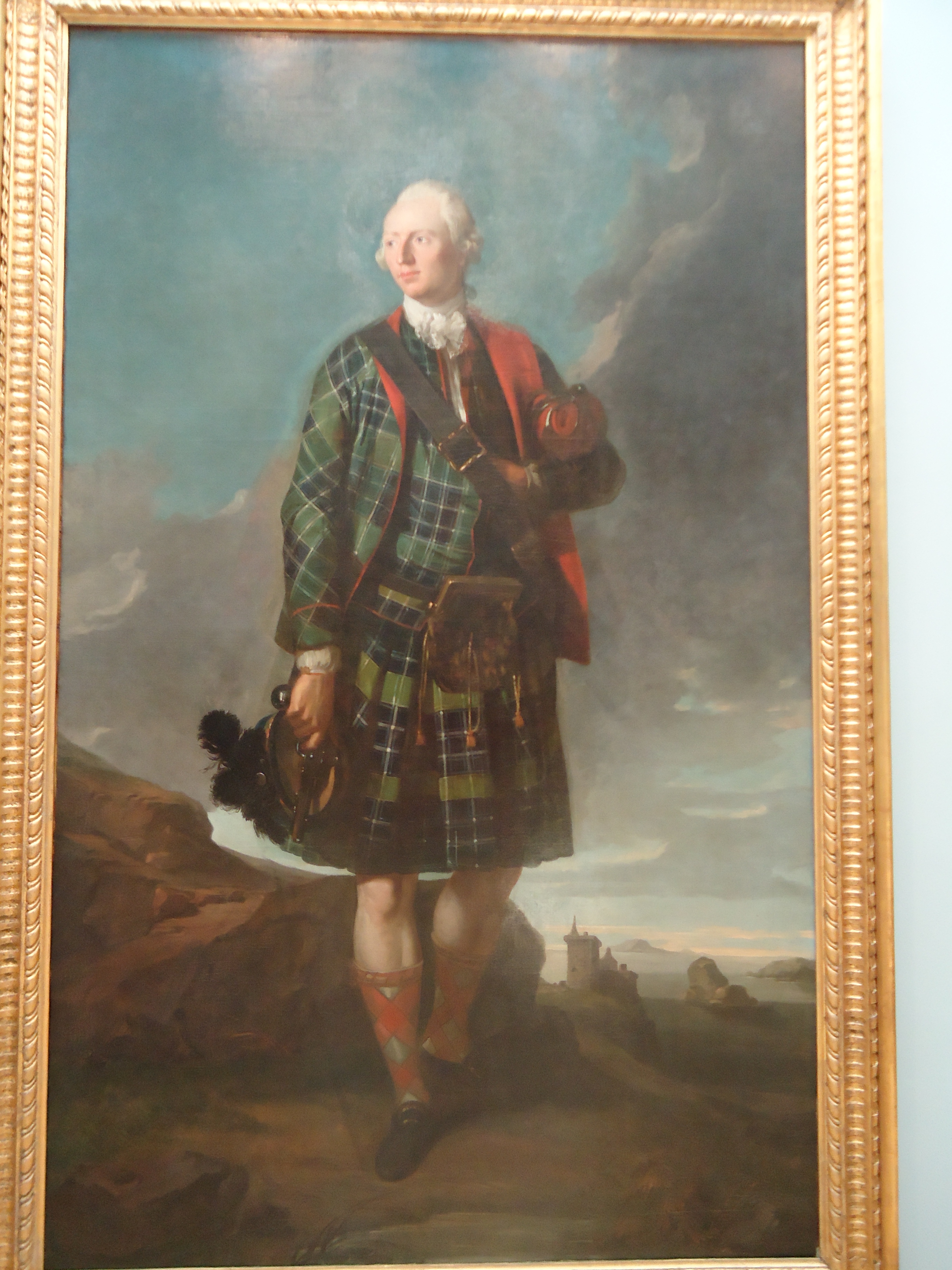
Sir Alistair MacDonald - attr Chalmers - 1772 - HandBound, late 18th century example of Scottish plaid in historical costume, mens historical costume, history of the kilt,
Sir Alistair MacDonald - attributed to Chalmers - 1772
Details:
- These are great images. It was a real pleasure to be able to see such large portraits showing kilted suits. Here is one of those images and this portrait was atleast 1.5 mts in height.
- Here the jacket takes on the more cut-away look of the late eighteenth century.
- We're not too of-fay with kilts and the particulars worn with them and dates of when such items came into popular use are unknown to us, but here he wears a Sporran, has either plaid stockings or strapped up looking laces.
- Ruffle-less shirt sleeves, high cravat and frill, short waistcoat trimmed with red (what looks like) piping.Red Faced jackets which at this stage is kind of the beginning of the lapel.
- He carries a hat in tartan and a gun in his right hand and a 'no idea what' in his left.
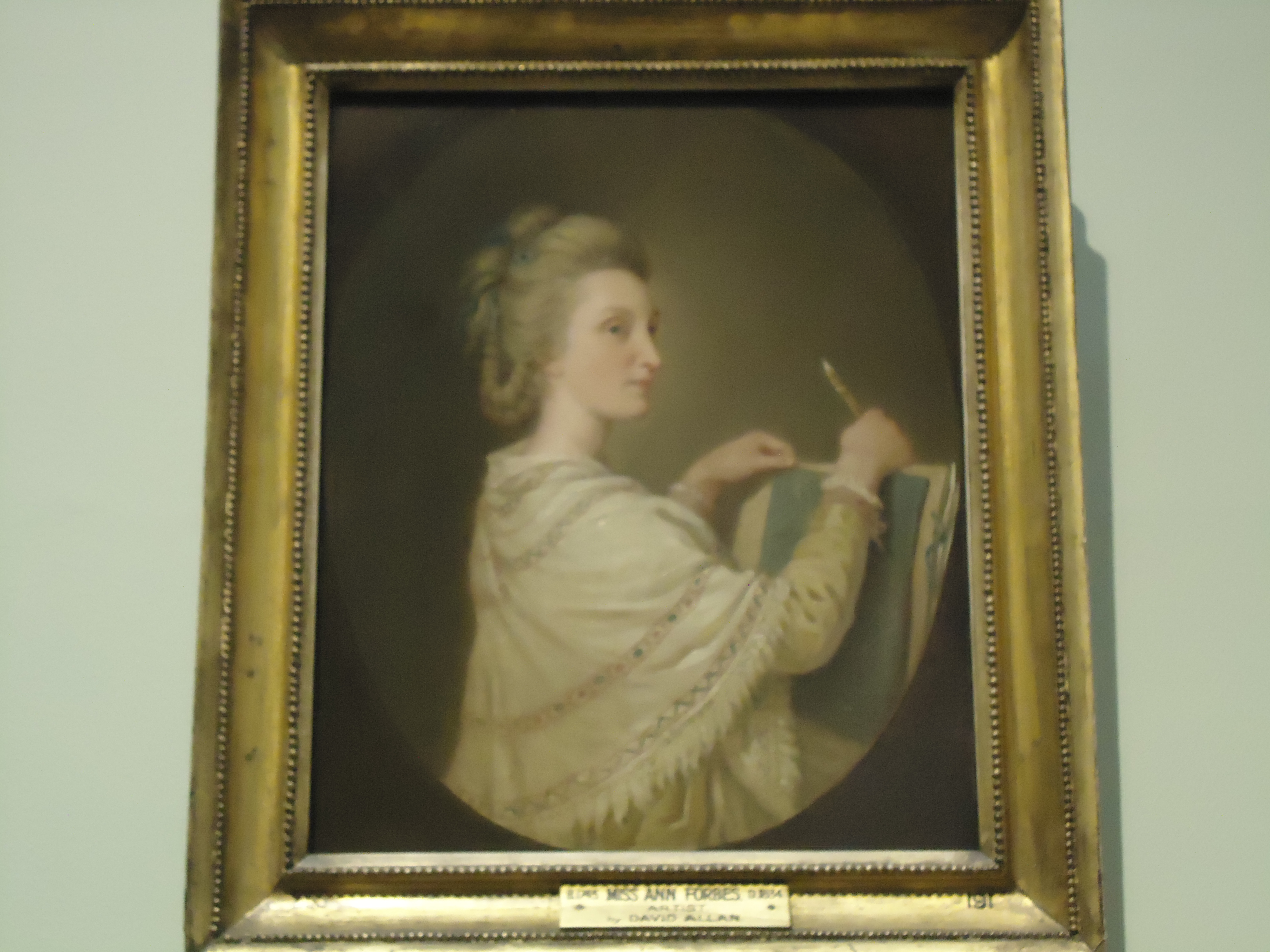
Ann Forbes - David Allan 1781 - HandBound Costume, womens eighteenth century costume research, portraits of fashion for the 1700's, 1780's fashion
Anne Forbes (1745-1834) by David Allan - 1781
Details:
- Anne Forbes, according to the museum's notes was a painter who studied in Rome but on returning didn't quite make it in setting herself up as a portrait painter. She settles for being a drawing teacher which was considered a more appropriate role for a woman.
- Here's she's depicted wearing quite a distinctive shawl. It has a fringing edge - probably long fur and liens of decorative trim.
- Her hair is also quite clear and distinctive - with the large plait coming up from the bottom - and natural.
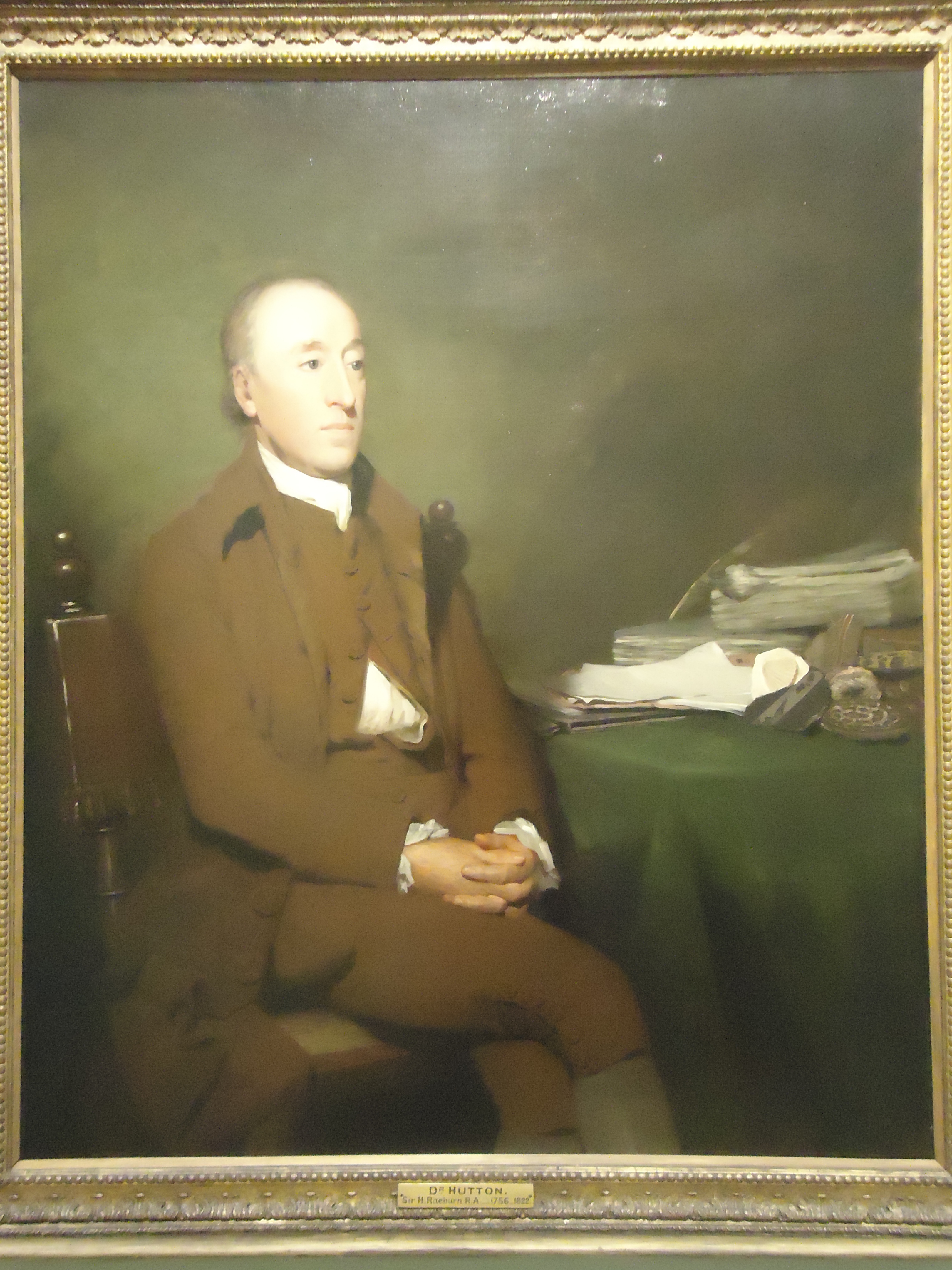
james Hutton - Raeburn - 1785-90 - HandBound Costumes
James Hutton by Sir Henry Raeburn - 1785-90
Details:
- James Hutton is considered to be the founder of the study of  Geology. His portrait here shows some of his Naturalistic interests.
- His three piece suit appears to be all the same fabric and colour with his breeches buttoning uite high with fairly small buttons and a narrow leg.
- His jacket has a Collar and no cuffs and the sleeves are also quite narrow.
- Again we have this buttoning up of the top part of the waistcoat and then down below the waist and with the shirt showing through the middle.
- He wears no wig but as the notes say; this derives from a relaxed portrait with him in his study and as he would be.

Wednesday, 7 May 2014

Ruby Silk Robe a l'Anglais

A Robe a l'Angais of Ruby Silk:

c.1760

(All these images are used with permission from the Totnes Fashion and textile Musuem)
HandBound Historical Costume research, 1760's robe a la anglais, how a robe a l'anglais was sewn, georgian 1760's sack back in ruby silk, a study of a 1700's robe a la francais from the totnes fashion museum, images from original garments, examples of sewing techniques used in the eighteenth century, georgian sewing methods, furbellows and how they were made, ruching and early examples, fly trim, ruffled cufss from the late 1700's, 18thc dress in study, 18th c costume and dressing like the duchess, antionette style, mdm pompadour and what she would have worn
Front View
Ruby Silk Robe a l'Anglais.
c.1760
Details:
- Open Gown with both open bodice to reveal stomacher/stays and open gown to reveal petticoat.
- Robings either side and decorated with furbelows.
- Furbelows also trim down the CF skirt and around the cuffs
- Furbelow is quite tight with fabric, being very mean with the gathers and comes across almost flat. Fly trim decorates either side.
- Bodice is linen lined.
- Two tiered ruffle cuff with fly trim at the end of each ruffle.
- Ruffles sewn onto sleeve leaving a band on the inside for sewing flounces or lace ruffles onto.
- Furbelow trim is same depth at back neck as on front.
- Bodice has dart at front and then a two panelled back with CB panel going into the skirts.
- No Pocket openings
- Robings fold Herringboned Stitched down.
- 1/4 Inch raw selvedge seams.
- Furbelows sewn down with a Stab stitch.
- Petticoat has a curved hemmed Trim.
- CB Pleats have been Stab stitched down
HandBound Historical Costume research, 1760's robe a l'anglais, georgian 17660's sack back in ruby silk, a study of a 1700's robe a la francais from the totnes fashion museum, images from original garments, examples of sewing techniques used in the eighteenth century, georgian sewing methods, furbellows and how they were made, ruching and early examples, fly trim, ruffled cufss from the late 1700's, 18thc dress in study, 18th c costume and dressing like the duchess, antionette style, mdm pompadour and what she would have worn
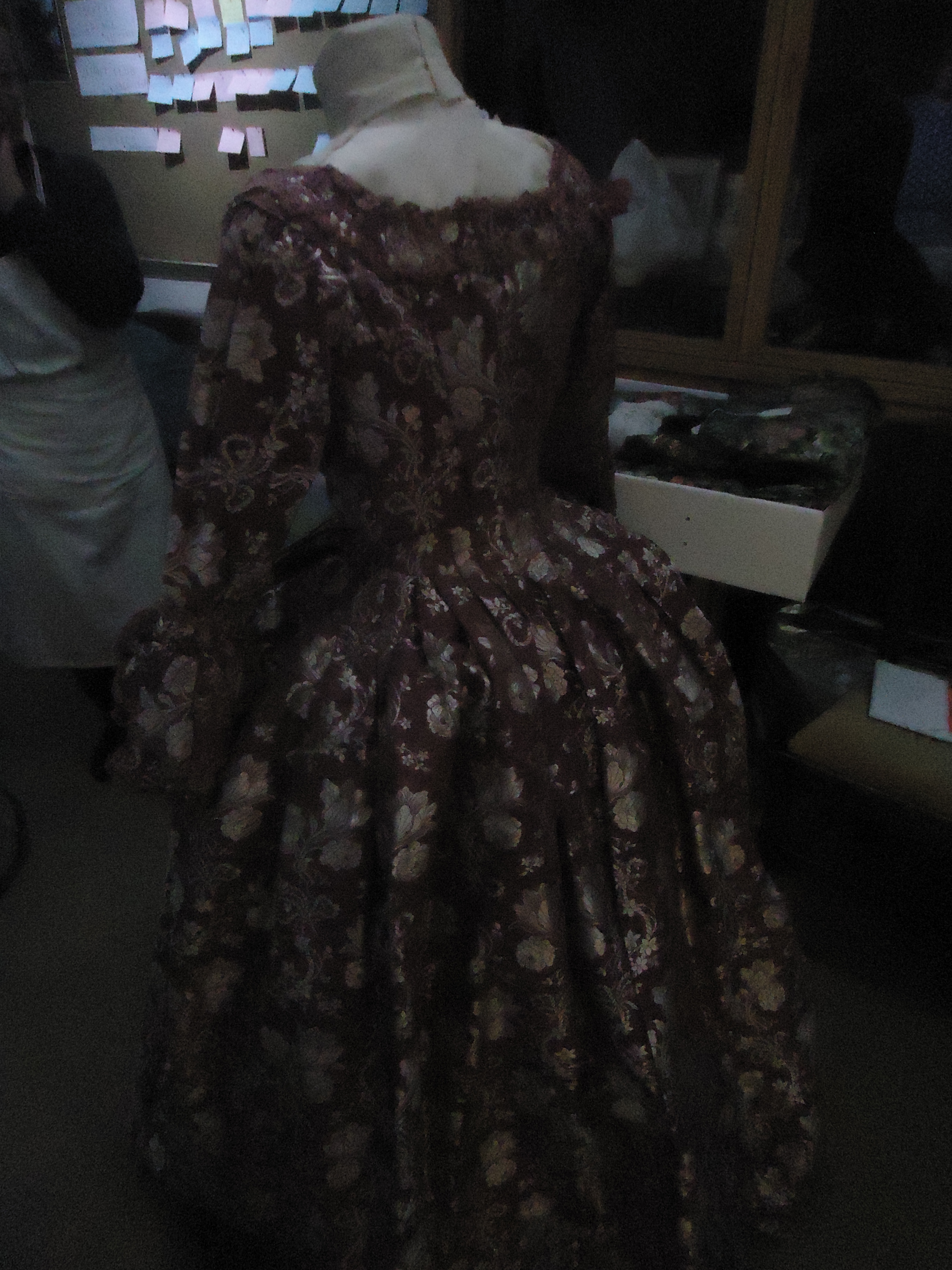
Back view
We know these photo's appear quite dark but the lighting is specially designed to protect the cloth and obviously a flash wasn't allowed. But we believe you can still see the details clearly - enough to be able to learn from them.

HandBound Historical Costume research, 1760's robe a la francais, georgian 17660's sack back in ruby silk, a study of a 1700's robe a l'angais from the totnes fashion museum, images from original garments, examples of sewing techniques used in the eighteenth century, georgian sewing methods, furbellows and how they were made, ruching and early examples, fly trim, ruffled cufss from the late 1700's, 18thc dress in study, 18th c costume and dressing like the duchess, antionette style, mdm pompadour and what she would have worn
Out on the table
What we have following are images of close-up parts of the gown while it was on the table awaiting to be dressed onto the mannequin. In the above image you can see the furbelow trim edging the robings and the skirt and you can see the lined bodice and pleated top of the skirt.
ruby silk robe a l'anglais, english gowns and robes, musuem collections online, construction techniques into making a robe a l'Anglais, HandBound Costumes historical sewing techniques research,Robe a l'Anglais, Goergian dress from the museums, Examples of furbelow trim, pleating of skirts, ruffled cuffs and robing methods, georgian dress, eighteenth century costume from museums, custom made HandBound historical costumes, replica period clothing, reproductions costumes for reneactments, bespoke historical garments
Sleeve Detail
The amazing thing when you study and visit these dresses is sometimes, however mind blowing the fabric is and the excitement of seeing something 200 years old, you can still get an idea of when a dress was quickly or slightly more on the cheap. This is a fairly simple example of a Robe a l'Anglais, fairly slim on the CB pleats, mean on the trim and basic in the pleatage system around the waistline of the skirt. You can well imagine the lady putting most of the money into the fabric and not having much left to pay the tailor.
Here's an example of the way the sleeve has had the ruffles sewn on, leaving the band beneath. As you can see the Ruffles have been sewn down higher up onto the sleeve, leaving this protrusion that can be used to sew the lace ruffles onto.
construction techniques into making a robe a l'Anglais, HandBound Costumes historical sewing techniques research,Robe a l'Anglais, Goergian dress from the museums, Examples of furbelow trim, pleating of skirts, ruffled cuffs and robing methods, georgian dress, eighteenth century costume from museums, custom made HandBound historical costumes, replica period clothing, reproductions costumes for reneactments, bespoke historical garments
Sleeve Furbelow close-up
To the left here, is an image showing in close detail the size and gathering of the furbelow with Fly Trim. the Fly trim has been applied much more generously and the Furbelow much tighter gathered. I wonder why really, was it that the sleeves were a particularly noticeable spot? I can't see them being any more noticeable than the whole front of the dress. Or could it be that in the pattern cutting it was easier to get a these tinier strips out than it was for the wide and longer lengths needed for the front trim?
I obviously had a relatively short time and between taking photo's, helping hold doors open and taking super-quick sketches, there wasn't really loads of time for taking measurements and such.
I'm going to include my rather bad sketch and notes of this dress aswell as it may help complete the picture and I dare anyone to be able to read my scribbled notations. When I sketch I always think, 'this drawing is not so important: I have the photos as the main records' but then when I see the photos I think 'what I need is my drawings with all the notes arrowed in'. But I hope you find both of them useful.
Here's a quick image of how flat the Furbelow trim at the front of the dress looks (please look right):
Totnes Fashion Musuem, Red 18th century Dress, Brocade Silk, Georgian Costume Research, What the Duchess wore, Eighteenth Century Clothing, Dress and Undress, Robe a la Francais, HandBound Historical Costumes Research
- This next image is a close-up of the top of the Bodice and shoulder including a detailed shot of the Furbelow and Fly Trim. You can see the stitching even from this photo, see how the Fly Trim has been gathered up and set into curves - It's like they've pulled one thread and then held it into place by catching it down. And see the barely-gathered Furbelow, the centre run of stitching and other stabbed stitches holding it in place. these Stab Stitches were done from the other side, creating a large running stitch on one side and barely noticeable pricks of a stitch on the other. The way we learnt it at the Tailor's was you had your hand on the Right Side of the garment (tiny stitch side) and you sewed into your finger almost, using the cushion of your finger tip to tell you how far you had come out. It is the same technique used in Padstitching collars. You can also see from this image the stitching used to hold down the CB Pleats typical of Robe a l'Anglais. This is a clear example of the stitching just mentioned above as the running stitch that we see here is coming out the other side as a tiny catching of the fabric.
Totnes Fashion Musuem, Red 18th century Dress, Brocade Silk, Georgian Costume Research, What the Duchess wore, Eighteenth Century Clothing, Dress and Undress, Robe a la Francais, HandBound Historical Costumes Research
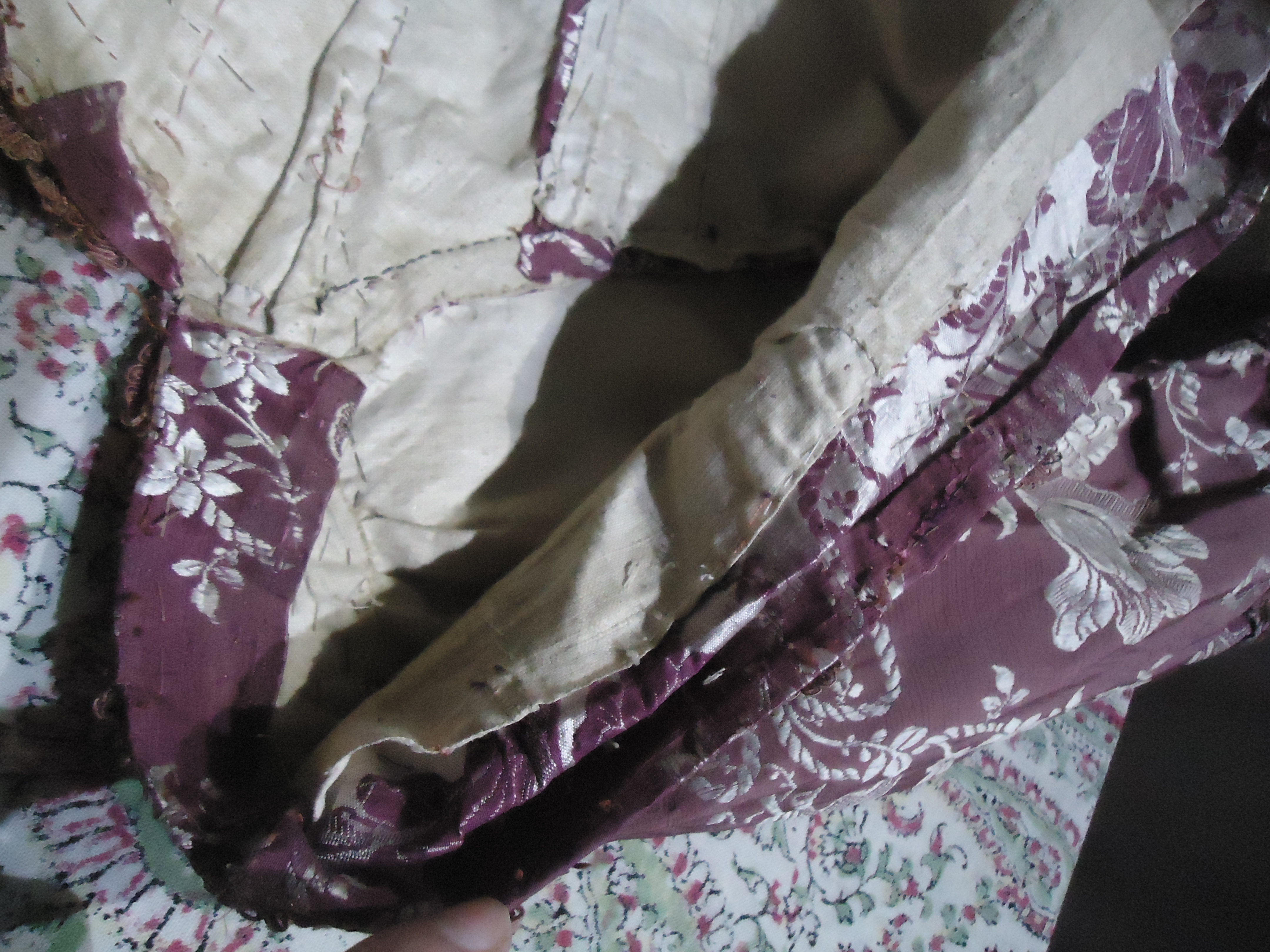
You can see here from the above image how the robings have been sewn down. This in itself is an amazing example of both how logical the Eighteenth Century Tailoring was but also how practical and functional.  You can see in this particular dress that it was a) Grown on and b) folded to the right specification and held there by the herringbone stitch and c) alos only had a small turn back for the centre front facing. The lining doesn't even come up to it! You just see this bare fabric turned back with what could seem like a sloppy raw edge. From a previous trip to the Totnes Fashion Museum, Julia Fox had said something that just clicked so much into place for me when looking at eighteenth century dresses. She said the reason why they left the additional corners of fabric that they didn't need, for example, in the pleating curve of the front fall of the skirt, was that if the dress was unpicked and ironed back out flat, there would still be as much as possible large squares of the original fabric. This meant that you could much more easily re-make it or use it for a different purpose. To me, that's just wonderfully logical. This logic could be followed through into the grown-on robings and the way the sacks were sewn down but kept in the Robe a l'Anglais'. You can see some of this raw edge, excess fabric in the gathered section of the skirt in the above image. It's not there in abundance but the amount of what we would call 'seam allowance' in the seam of pleats is clearly large, raw and fraying only just slightly after 200 years. Nowadays this would've been cut to each pleat and overlocked off and hidden by the lining.
Totnes Fashion Museum, Red 18th century Dress, Brocade Silk, Georgian Costume Research, What the Duchess wore, Eighteenth Century Clothing, Dress and Undress, Robe a la Francais, HandBound Historical Costumes Research
This image above here may look upside down and it probably is, but the whole detail of it is looking down from the top right hand corner of the dress, down into the front robing that is being held out by the finger, but also down into the back section of the dress and seeing the shoulder band, the sleeve lining and the scye seams. There are many interesting details in this photo. You can see the pin holes from pinning down the robings travelling along the inside of the cf Robing as held out by the finger. You can see clearly the large tacks that were holding down the furbellow trim, and the amount of what looks like random large stitches in the sleeve lining of the crown and the lining of the back. These stitches weren't arbitrary. Modern day tailoring has been developed to hide as much of the inner workings as possible. Less visible stitching has been encouraged when sewing in a way that will be seen, and the lining has been designed to hide as much of it as possible. It's hard to look at stuff like this and not think it was a rushed job, or that they were being sloppy. And it's hard for us when trying to replicate a garment for selling, to not use these newer techniques for the neatness of our garments - we know we do it here at HandBound. A part of me would like to work through the same sewing process they worked through and experience it. There's always so much more research to do! A part of me loves the idea of making up a garment completely using their techniques and beholding the raw edginess of it all in all it's glory.