Saturday, 12 December 2015

Working on Coifs

17th C. Coifs

We had the unexpected pleasure of studying a few of these little babies during a study session at a Museum. And little they were! They were so delicate as we carefully lifted them out of the box of caps at the Manchester Costume Museum and so very different from the 18th c caps we'd come to study.

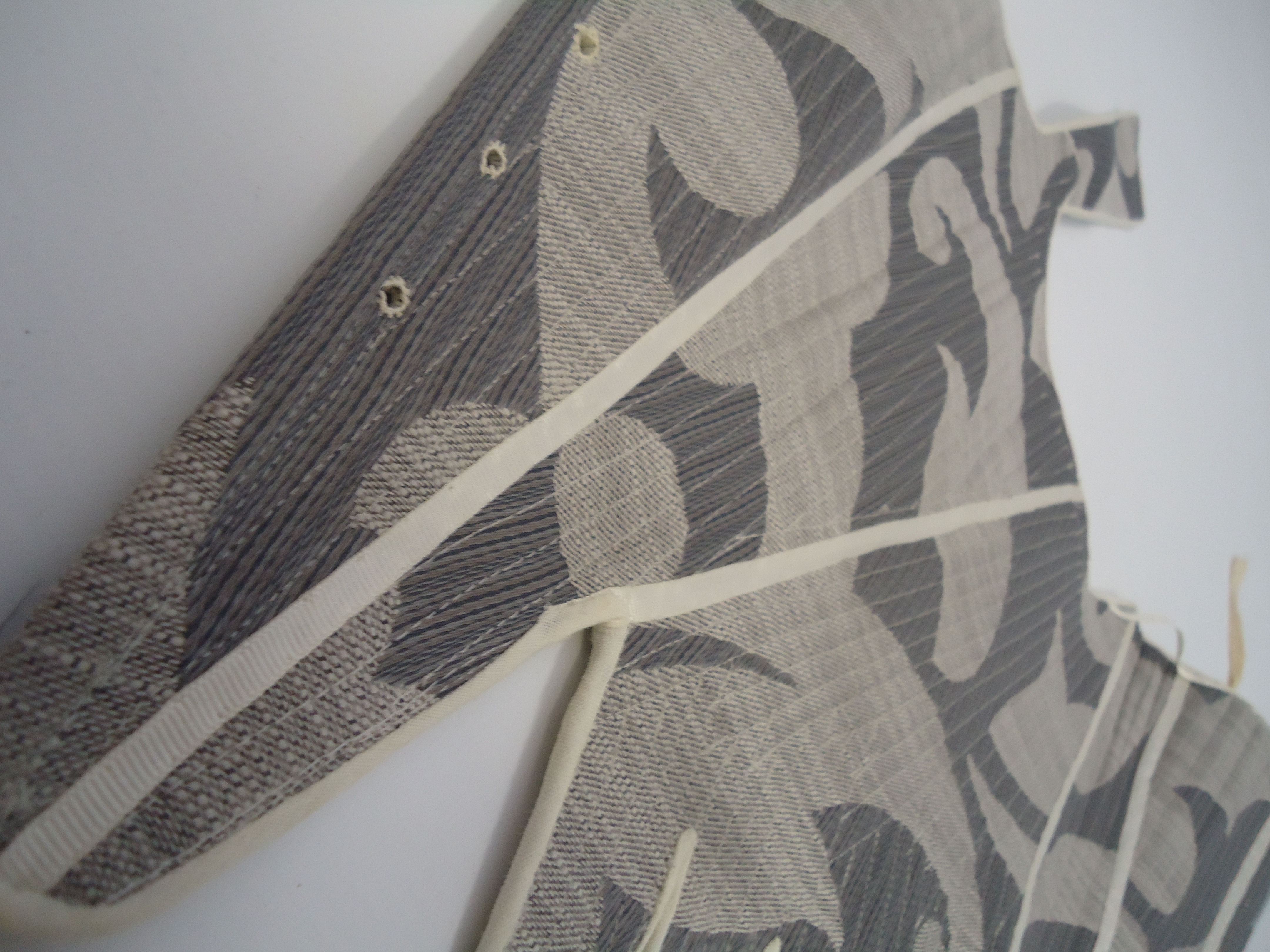
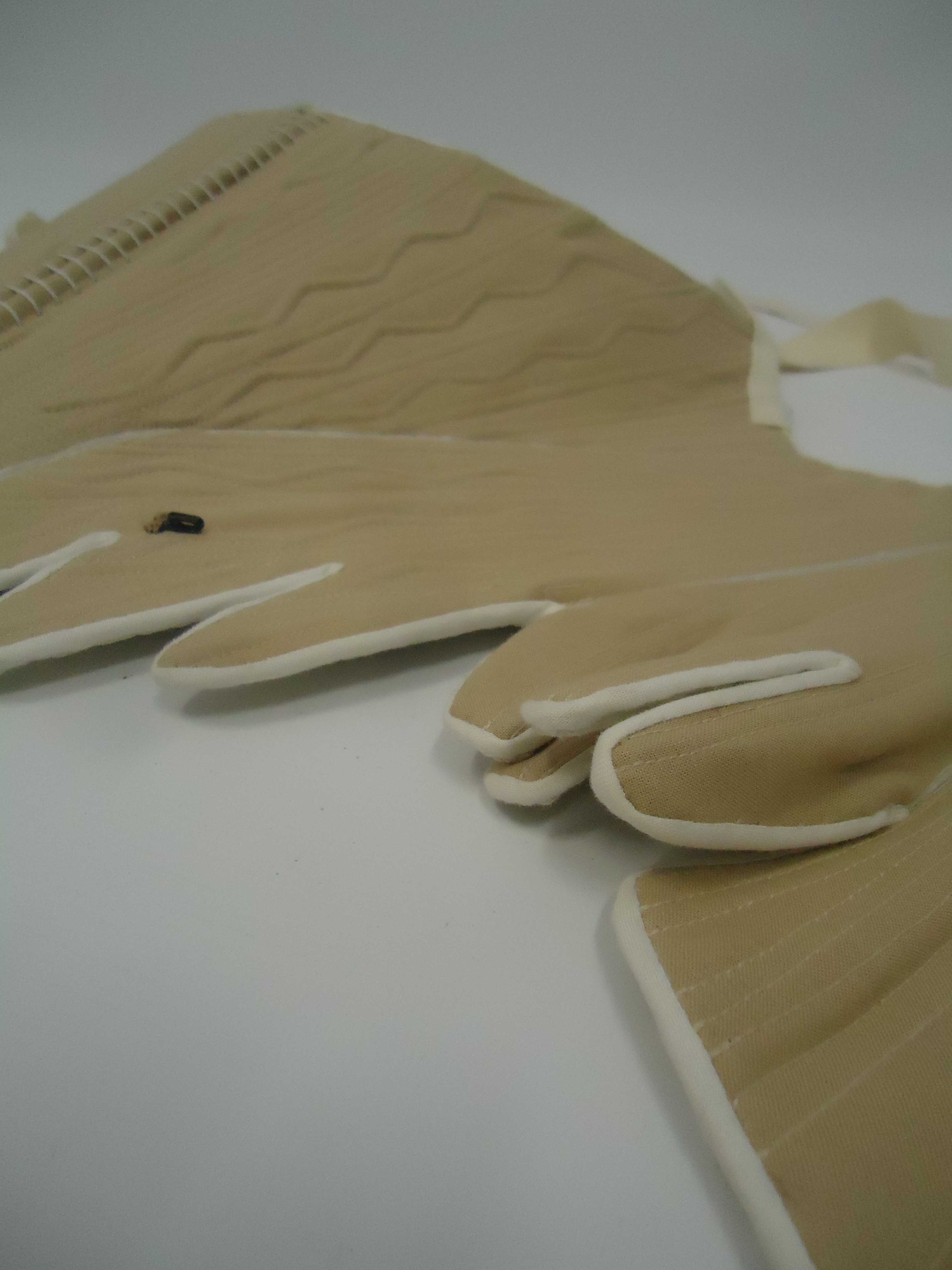
Sadly we're not allowed to share our images online but have put here instead images of our re-creations.

These coifs are literal head caps and the shaping created by the gathering circle positioned at the crown is gorgeous and simple. We learnt so much about their construction it was incredible. There was one Blackworked Coif that hadn't been made
Our Classic Coif
up yet so we got to see that stage of the preperation, and then looking at two other you could see how they were put together. 
With the top seam finished and complete, the two finished edges get abutted up to one another and sewn. The length was somewhere between 2 3/4" to 3" long. What was left over was delicately hand stitched into a circle and joined.

Our Blackwork Coif
The rest was unshaped except for a channel running the length of the hem for a ribbon. One of the coifs had instead of a channel, a line of loops through which 2 ribbons passed through. Each ribbons was secured at the other end so that they acted as a draw-cord. Very clever, except, perhaps a little too clever for us as we still can't figure out what they did with the ribbons then - where did they tie them? Has anyone seen image of ladies with a tie around their neck from their coifs, because we haven't. Not that we've massively studied the 17th c yet - still being happily stuck in the 18th - but this is a little mystifying. If they tied the ribbons together then it pulls the hem of the cap under and would no long sit nicely. Anyone else know?

Anyway, through this study session we have developed a Blackworked Coif, a Gentle-Eared Coif (our words lol - not a 17th c term) and the Classic Coif. The Blackwork Coif comes with a Forehead cloth as did one of the originals in that wonderful box and our forehead cloth has been created to mimic that one.

Here's a quick video of one of our Coif Sampls: Coif Footage (please click here!)

Tuesday, 3 November 2015

No.3 New Street - M.Barker Mantua Maker

M.Barker Mantua Maker:
Dated 1783

I have just been reading a post from 'At the Sign of the Golden Shears' blog and came accross this.... Just wow it made me laugh. For anyone who doesn't know, my name is Michelle Barker - hee hee.

Actually, while we're on this subject, I've been wondering about the name of the business - I loved it, loved it, loved it when it first came up but now am doubting, doubting, doubting. Does anyone have any thoughts on the name HandBound Costumes?

Mdm Maisonnet - Liotard - 1755

Portrait Studies

Mdm Maisonnet by Liotard - 1755

We always meant to put up some of the images that just capture the attention when we do our research; really study into them and list what's seen. This particular artist is always cropping up and Jean-Ettiene Liotard had a true ability to capture a certain realness from his sitters.

We've only made a quick list, but it's amazing what can get spotted even from doing something quickly!

Mdm Jean-Louis Maisonnet

Details:
- Cap with lappet pinned under chin with what looks like white worked decoration.
- Blue ribbon having a hint of being not just decorational but functional in possibly helping hold the cap on.
- Her sack back has double robings which are very wide robings.
- She looks as if she has a laced front but made from the self fabric as the dress and laced in a method of straight lacing. Don't know what the buttons are - it could be that it's a slightly deceiving view and that the buttons are in fact CF, or that they are a detail or method of holding down what the lacings look to be doing. Hmm....who knows.
- She wears her neck cloth pulled taut over the top of her bodice and then neatly and flatly tucked in to a lower lacing bar.
- Her sleeves are a lot less wide and baggy than other dresses from a similar period and represent the slow shift to a neater, more fitting sack back gown.

- We know it's rather obvious but the colour of her gown is a pale blue.
- She also is wearing her haIr tied back and natural and is not wearing any noticeable make up. We thought in France they are always in rouge!

Thursday, 24 September 2015

And Our New Floral Polonaise...

Our New Polonaise...


These dresses are always so stunning to look at - especially the originals in the museums, and there is something just naturally attractive about them. 
Here is our version of a Polonaise in the Gallery of English Costume that we have just listed on our Website and in our Etsy Shop.
We hope you like!

Etsy:

Website:

There is a lot more info and photos on our website for these new items - Etsy only limiting you to 5 pictures and also we have tabs on our website for talking you through 'The Making of...' and 'The History of...' and sometimes 'How to Wear...'. We also have our beloved Customer Library which though we are well behind on our job list, we are constantly adding to in the desire to fill it with useful info.

Please have a browse!

Tuesday, 22 September 2015

Our new Yellow Sandby Anglais...

Finally!....Our New Items...

We don't know how this has taken us this long to get these photos from the cd they were delivered on to finally being listed as our new garments but such things do get in the way! We've had a move, a holiday and the wonderful crashing of our old laptop :(. 
But every cloud has it's silver lining as we now have a new laptop and a much quicker response to our many demands....
Anyway, that's not what we're blogging about today.

Please welcome our new Yellow Sandby Anglais!!!!


This is the Sandby drawing she is based on....

A study on how neck cloths or Fichus or handkerchiefs were worn in the 18th century, historical costume research - a look into georgian costume and how it was worn., historical replica costume, Hand made period clothing, reenactment csotume, bespoke garments form the 18th century, accessories of the 18th century, dress like a georgian

 And this is what she looks like without all that covering...


We've put loads more details on our website, including details of how she was made - the techniques used, how to wear this type of garment etc etc.

Please click on this link below and have a dig about. We've tried to cram it with info so every page should have something new on it.


Tuesday, 4 August 2015

Hereford Museum Collections Centre

Study Session

At the Hereford Resource Centre

(All Images courtesy of the Hereford Museum Resource and Collections Centre)
Just a quick post...
Hereford Musuem and Collections Centre, Asc no.1621 Brown Stays 1790, Jill Salen Stays Corset Book, HandBound Stay research, late 18th c Stays, what are half boned stays? Hand made historical costume, custom made and replica work for re-enactment clothing
Asc no.1621
What an amazing place! We STRONGLY advise anyone wishing to study costumes to get themselves down there - it's a perfect blend of amazing staff (friendly and informative) racks of interesting artifacts and that magnificent study room where it's just you and your garment and all the time in the world.
Hereford Musuem and Collections Centre, Asc no.1621 Brown Stays 1790, Jill Salen Stays Corset Book, HandBound Stay research, late 18th c Stays, what are half boned stays? Hand made historical costume, custom made and replica work for re-enactment clothing
Brown Stays - c.1790
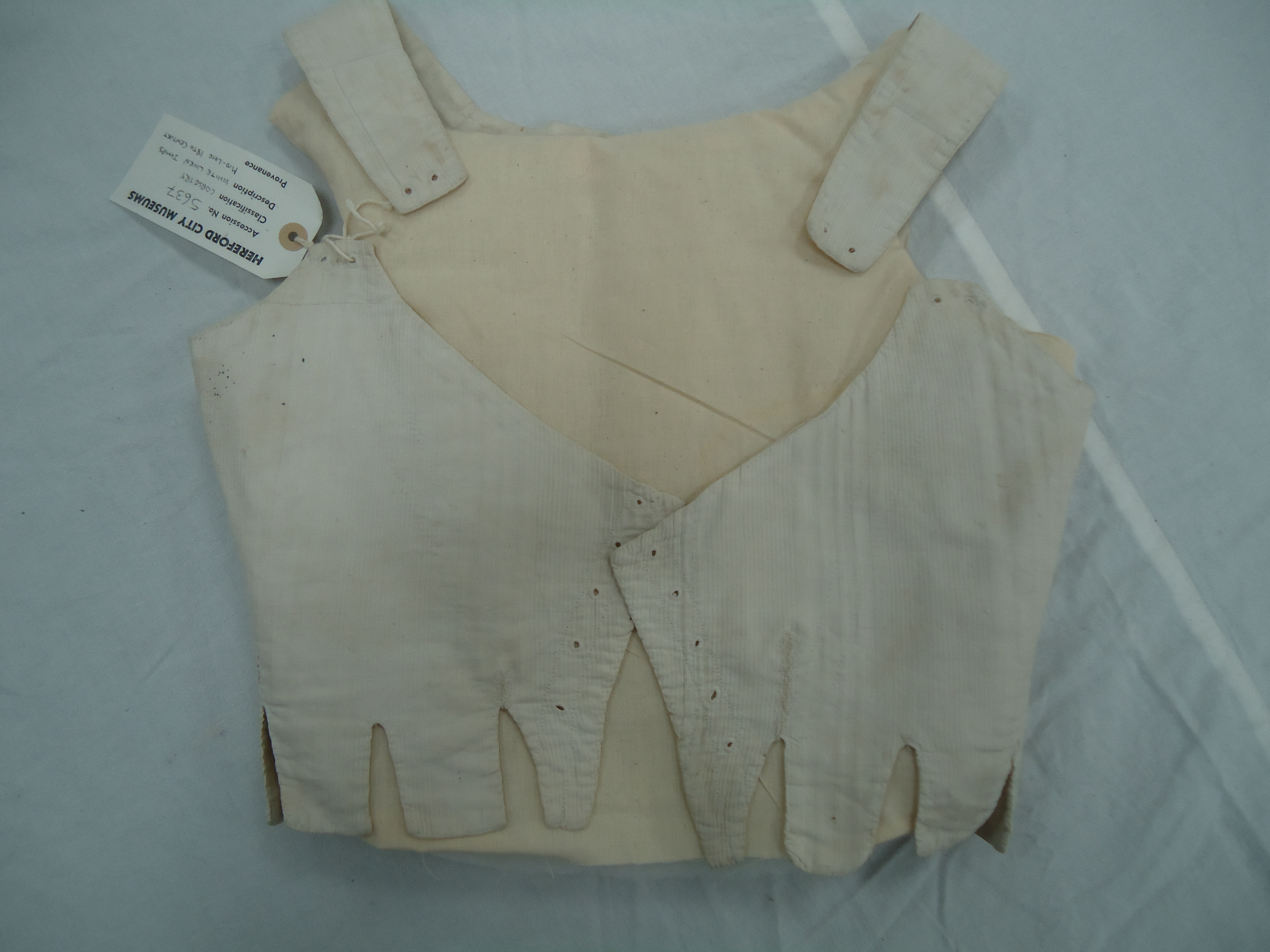
However, this time round we'd taken the trip up to see for ourselves the pair of Half Boned 1790's Stays (the Brown Jean ones on p.23) of Jill Salen's Book 'Corsets' and the White Linen Jumps on P.103. Which meant that not only did we get to see the construction techniques first hand but also got to draft our own pattern and take as many photos as we were able.
The Stays are stunning - I know it's easy to say that about most Stays but there is something indescribably simply sweet yet maturely complex about the pattern that goes way beyond just fashion. Stays somehow manage to blend craft, engineering and fashion all rolled up into one and the cut of these ones is perfect. Dated c.1790, these Stays embody the rising waistline and pushing forward of the bust that is essential to getting the silhouette that was fashionable for this period. More info on these Stays will follow.
White Linen Jumps - Jill Salen 'Corset' book -1790s, what are jumps?, 18th c underwear, researching into what women wore in the georgian period., hand made and historocally based period clothing, made to measure historical costumes,
White Jumps - c.1790
The second item we got to study was the pair of linen Jumps - these were pretty but plain and a really basic shape - very interesting to go (wow, how hard it is not to use the word 'jump'!) from the curvaceous, body altering Stays to these Jumps that barely have much contour in the pattern. More info on these to follow as well!
We also managed to finally finish drafting a pattern of a 1770s silk Anglais - we started it last time we were at the Centre but never had time to get the sleeves done - so that's a happy completed job! We'll try and do a study page on this one.
We also managed to just about squeeze in another pair of late 18th c Stays - very similar to the Brown jeans one but slightly different. the pattern is better if that's possible but they have been possibly re-covered as the stitching is very basic. It's up for debate as the rest of the Stays is fantastic quality - again more to follow.
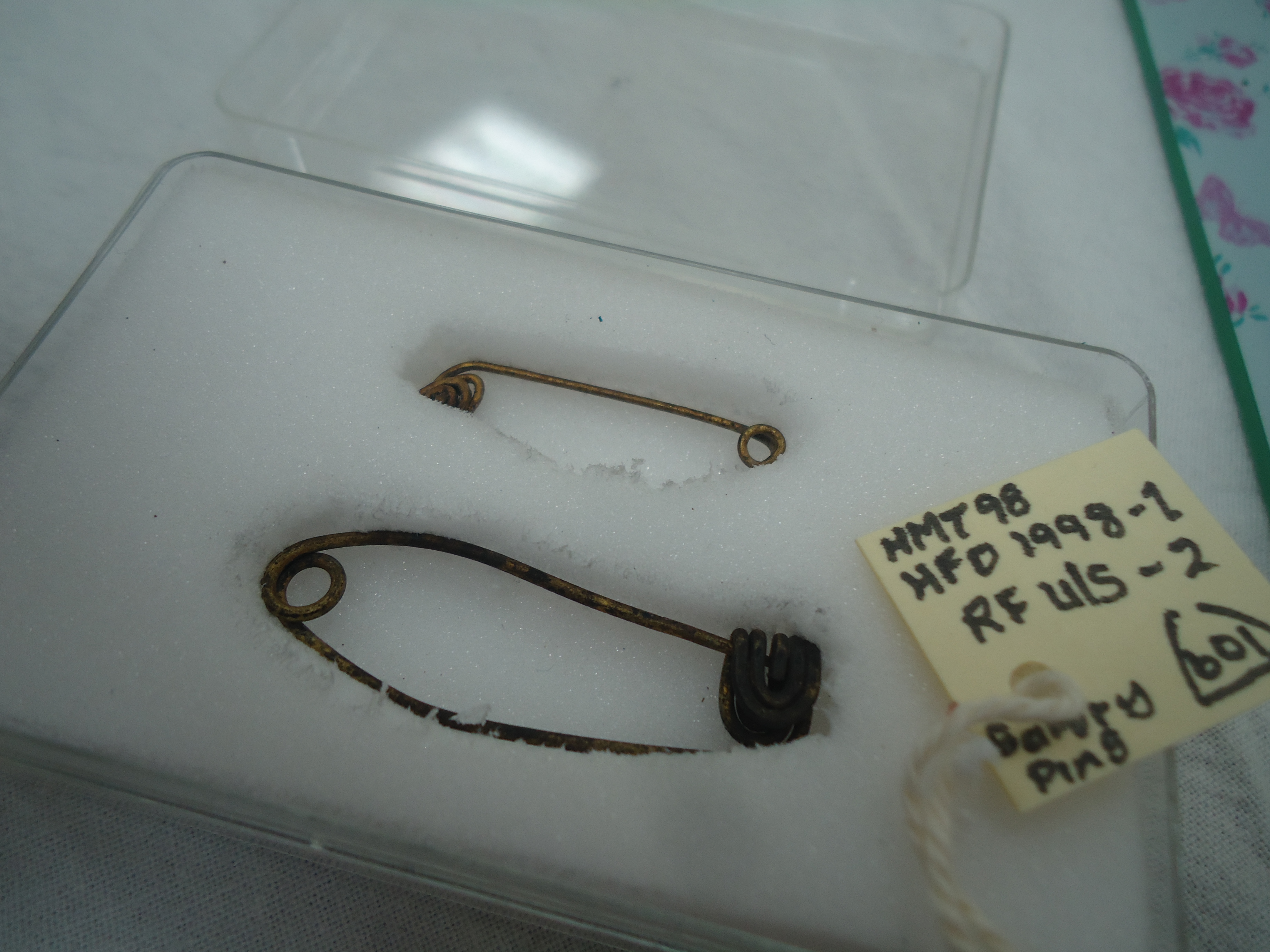
Also (this was supposed to be a quick post!) but check out these AMAZING safety pins - est. date of 1600s - 1700s.
17th - 18th century safety pins, 18th c costume research, when were safety pins invented?, hereford Collections and resource centre, georgian costume, hand made 18th cnetury underwear and clothing by HandBound costumes, made to measure museum based period clothing
Safety Pins - est dated of 1600s-1700s
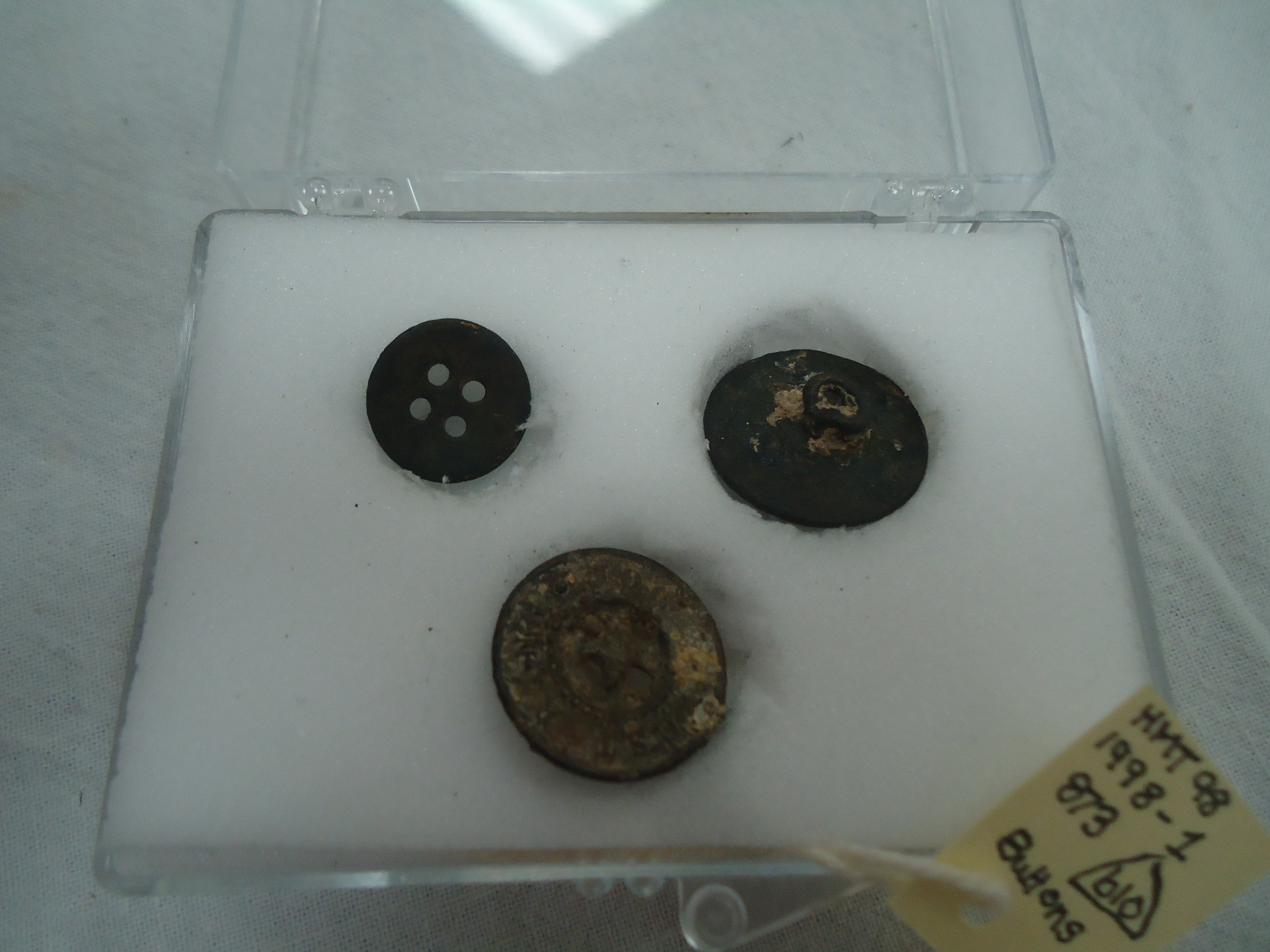
And some buttons - there's a 4 hole small, a shank plain metal and a rimmed button with stamped lettering - so so similar to our modern day jeans buttons!
medieval to post medieval buttons - stamped buttons - shank buttons - historical buttons, 17th - 18th century safety pins, 18th c costume research, when were safety pins invented?, hereford Collections and resource centre, georgian costume, hand made 18th cnetury underwear and clothing by HandBound costumes, made to measure museum based period clothing
Historical Buttons

Saturday, 1 August 2015

A bit eager...

Some Quick Photos!

Morwenna Photographers - HandBound
Morwenna Photographers
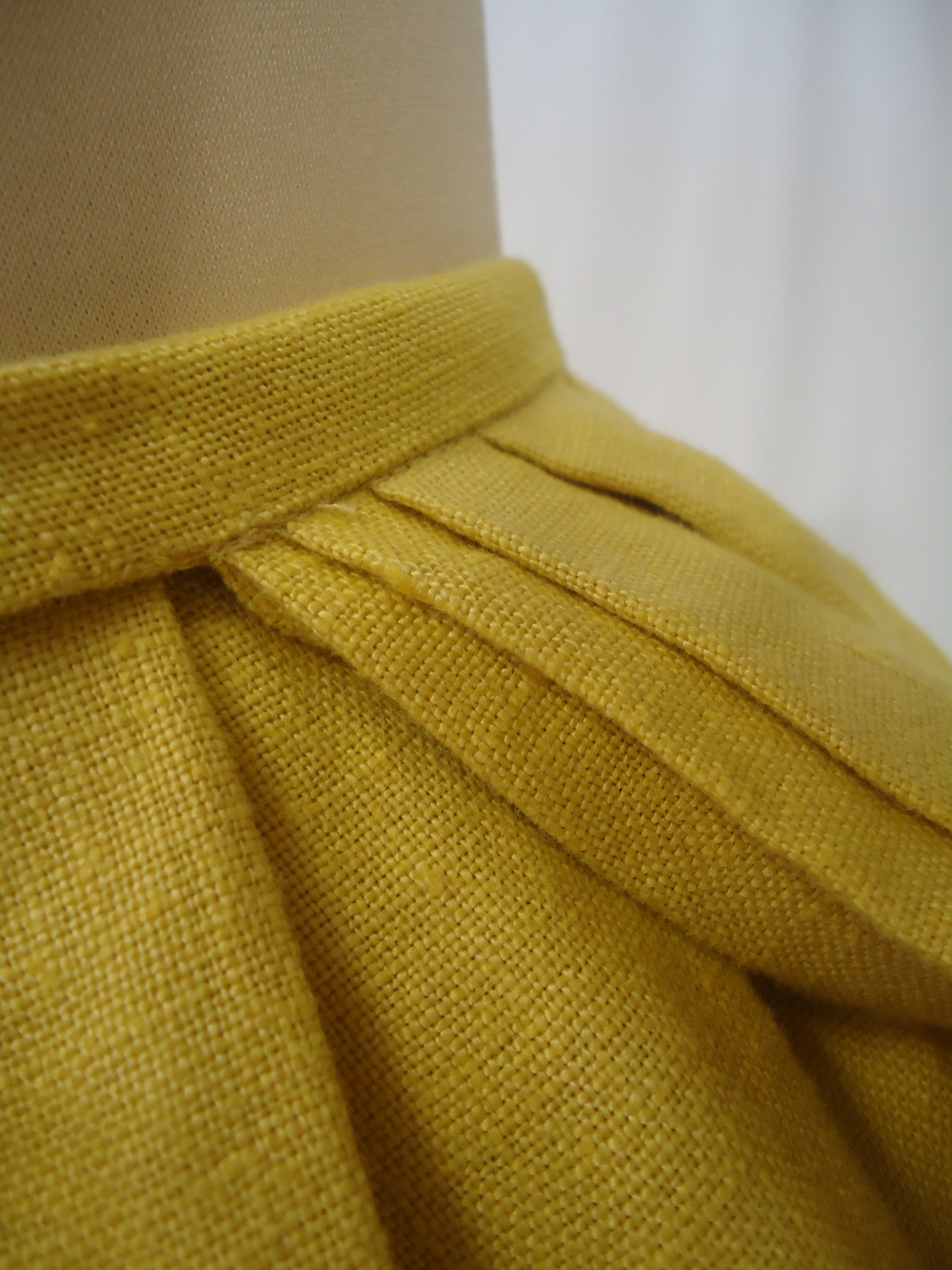
Yellow dress - HandBound costumes
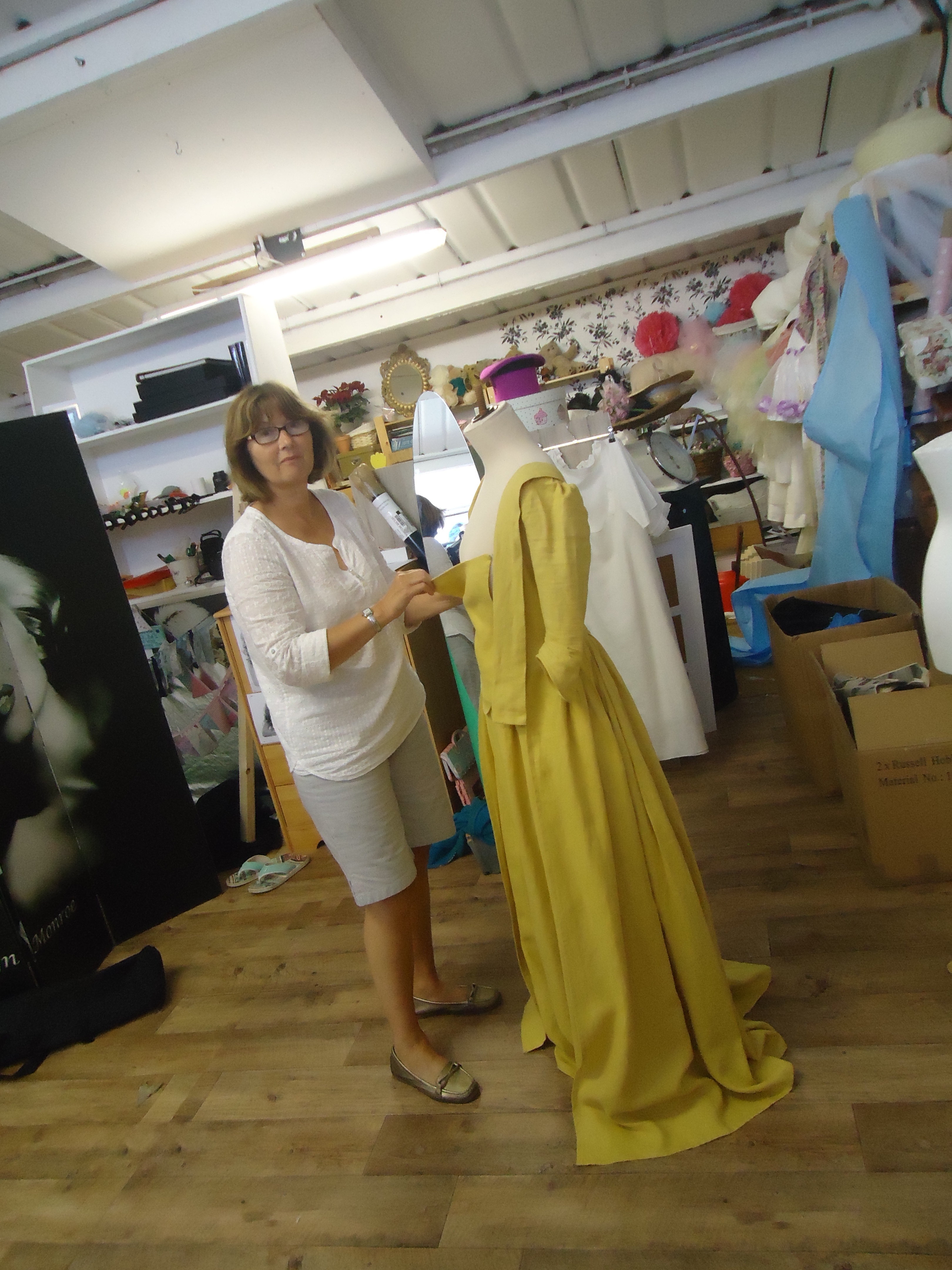
Yvonne dressing the Yellow Sandby
Too eager to wait for the arrival of the proper photos from our photo shoot on Thursday, I'm putting up some of the shots I took during the day. Morwenna Photography studios were sublime - bearing with us patiently. And Gina, the photographer was a complete soldier, taking photo after photo while we dressed the mannequins in the background and shifted them into place.
I thought I'd take a lot more background photos throughout the day than I did but it's amazing what gets forgotten when you're concentrating on something else! And we were so busy sorting out the costumes in the back ground that we didn't take a moment to consider it more often.
Grey Damask 1700s Stays - HandBound
Our Grey Damask Stays...

McCord Stays - 1780s - handBound
Our version of the McCord Stays
yellow sandby dress - 1750s - HandBound
Petticoat of our Yellow Sandby Dress